After a big storm rolls through metro Atlanta, the roof is usually the last thing anyone checks, and it's the part of the house that took the worst of it. Most storm damage isn't dramatic. It's bruised shingles, broken seal strips and dented vents that don't leak until months later.
Please don't climb on the roof. Everything below can be checked safely from the ground, a window or the attic.
1. Dents on gutters, downspouts and vents.
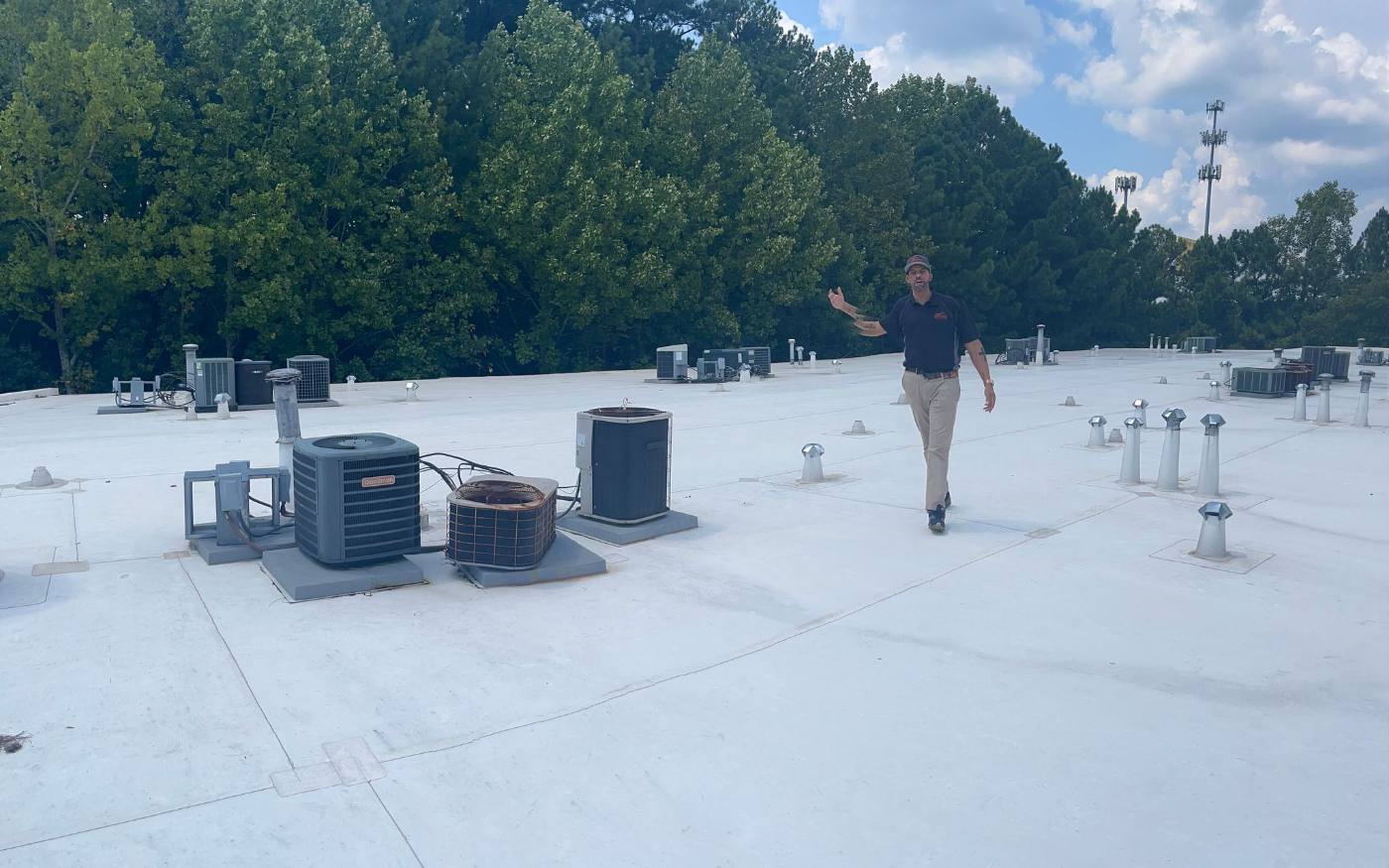
Look at your gutters, downspouts, the metal vents on the roof, and the fins on your AC unit. Hail dents soft metal easily. Fresh round dents are one of the clearest signs hail hit your house, and their size tells you roughly how big the hail was.
2. Granules in the gutters or at downspouts.
Asphalt shingles are covered in small granules that protect them from the sun. Hail knocks them loose. A sudden pile of granules at the bottom of a downspout after a storm is a red flag. (A steady trickle over the years is normal aging.)
3. Shingles in the yard.
Missing shingles, pieces of ridge cap or strips of shingle in the grass mean wind got under them. Where one came off, others nearby are often loosened too.
4. Lifted or creased shingles.
From the ground, look along the edges and ridges for shingles that stick up, flap, or show a straight crease line across them. Wind lifts shingles and breaks the seal strip underneath. A creased shingle no longer seals and will usually tear off in the next storm.
5. Dark spots or bare patches.
Dark, roughly round spots on the shingles can be hail hits where granules were knocked off. They're hard to see from the ground, but a zoomed-in phone photo sometimes shows them.
6. New ceiling stains or drips.
Brown rings on a ceiling, bubbling paint, or water around a light fixture mean water is getting in. The leak on the roof may be several feet away from the stain, because water runs along framing before it drips.
7. Problems in the attic.
With a flashlight, look for wet insulation, damp spots or stains on the underside of the roof deck, and daylight where there shouldn't be any.
8. Limbs on or touching the roof.
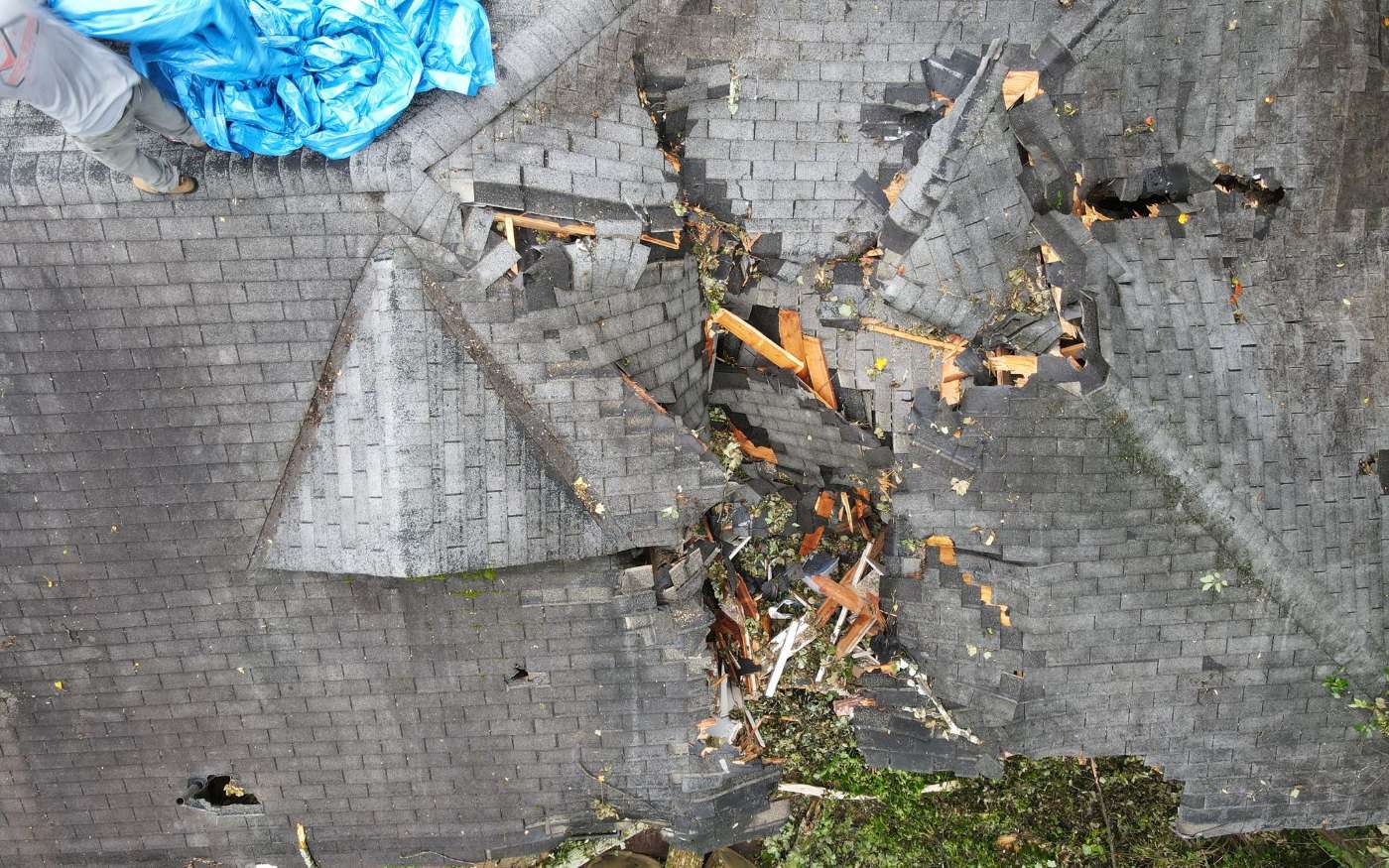
Even a limb that bounced off can crack shingles, puncture the deck or knock gutters loose. A tree resting on the roof needs to be removed by a tree service before anyone works on the roof.
9. Damage around the property.
Hail spatter on the deck or driveway, torn window screens, dented mailboxes and damaged siding all point to a storm big enough to damage the roof, too. Neighbors getting new roofs is another clue, though hail can hit one street hard and skip the next.
When damage means replacement.
A few damaged shingles can be repaired. Replacement usually makes more sense when:
- Hail hits are spread across multiple slopes.
- The shingles are older or discontinued, so repairs won't match.
- Wind damage is widespread or the seal strips have failed across the roof.
- Leaks show up in several places.
- The roof was already near the end of its life. See how long roofs last in Atlanta.
What to do in the first 24 hours.
- Stay safe. Keep people and pets away from sagging ceilings and anything under a fallen tree.
- Photograph everything inside and out, with dates. Your phone's time stamp counts.
- Stop the water. Move valuables, catch drips, and call for an emergency tarp if water is getting in. Your policy expects you to prevent further damage.
- Write down the storm date. Check it against our 2026 Atlanta hail storm log.
- Get a free inspection so you know what's really there before you file.
- Report the claim to your insurer promptly. Most Georgia policies allow 12 months from the storm date, but don't wait.
Watch out for storm chasers.
After big storms, out-of-state crews knock on doors across the metro. Some do fine work; many are gone before a warranty would ever matter. Read how to spot a storm chaser roofer before you sign anything.
Mosaic offers 24/7 emergency tarping and free storm inspections across metro Atlanta. Learn more about storm damage repair, hail damage repair and what adjusters look for.
Can storm damage show up weeks later?
Yes. Bruised shingles and broken seal strips often don't leak until the next heavy rain or the next storm. That's why an inspection after a significant storm is worth it even without a leak.
Can I see hail damage from the ground?
Rarely on the shingles themselves. Dented gutters, vents, downspouts and AC fins are the best ground-level clues.
Should I call my insurance company or a roofer first?
Many homeowners get a free inspection first so they know whether there's real damage before opening a claim. If water is coming in, call for a tarp right away.
Is storm damage covered by homeowners insurance?
Most policies cover sudden damage from hail, wind and falling trees. Wear and tear usually isn't covered. Coverage details vary, so check your policy.