Within days of a big hailstorm, metro Atlanta neighborhoods fill with trucks, yard signs and door-knockers. Some of them are legitimate local companies. Many are "storm chasers": crews that follow storms from state to state, sign as many contracts as they can, and move on. When a leak shows up a year later, the phone number doesn't work.
Here's how to tell the difference.
Red flags.
- They showed up at your door uninvited right after the storm, with no local address and out-of-state plates.
- They want a signature today. "This deal is only good today" or "sign so we can get on the adjuster's schedule" is pressure, not service.
- They offer to waive or "cover" your deductible. Your deductible is your responsibility. Offering to absorb it, rebate it or hide it in the invoice is insurance fraud, and it can put your whole claim at risk.
- They say they'll handle the insurance company for you. In Georgia, a roofing contractor can't represent you or negotiate your claim. Only a licensed public adjuster or an attorney can do that.
- They want a big deposit up front on an insurance job.
- There's no physical presence: no reviews older than a few months, no local references, a cell number only.
- The contract is vague: no line items, no materials listed, no warranty in writing.
- They climb your roof without permission or "find" damage you can't see in the photos.
Your rights under Georgia law.
Georgia has specific protections for roofing contracts that will be paid with insurance money. Under the law:
- You can cancel the contract before midnight of the fifth business day after your insurer tells you in writing that all or part of the claim isn't covered.
- The contractor must give you a written notice of that right and a detachable cancellation form with the contract.
- The contractor can't require payment until that five-day window has passed, except for emergency work you approved in writing, like tarping.
- A residential roofing contractor can't represent you or negotiate your claim with the insurance company.
If a contractor's paperwork doesn't include the cancellation notice, that tells you something. (We're roofers, not lawyers. For legal questions about a specific contract, talk to an attorney.)
Questions to ask any roofer.
- What's your local address, and how long have you been in Atlanta?
- Can you send your license number and a current certificate of insurance? Ask for general liability and workers' compensation, and call the insurance agent to confirm it's active.
- Which manufacturer certifications do you hold? Certified installers protect the manufacturer warranty.
- Who will actually be on my roof: your crew or a subcontractor?
- What does your workmanship warranty cover, for how long, and does it transfer if I sell?
- Can I see recent jobs and reviews in my area? Look for reviews going back years, not weeks.
- Will you pull the permit?
- What happens if you find rotten decking? Get the answer in writing.
How to check a roofer out in ten minutes.
- Search the company name on Google and read the oldest reviews, not just the newest.
- Look up their BBB profile.
- Confirm their manufacturer certification on the manufacturer's contractor locator.
- Call the certificate holder's insurance agent to confirm coverage.
- Drive by a recent job if they'll give you an address.
What a good storm response looks like.
- A free inspection with photos of every slope, before anything is signed.
- A straight answer, including "your roof is fine" when it is.
- A written, itemized proposal.
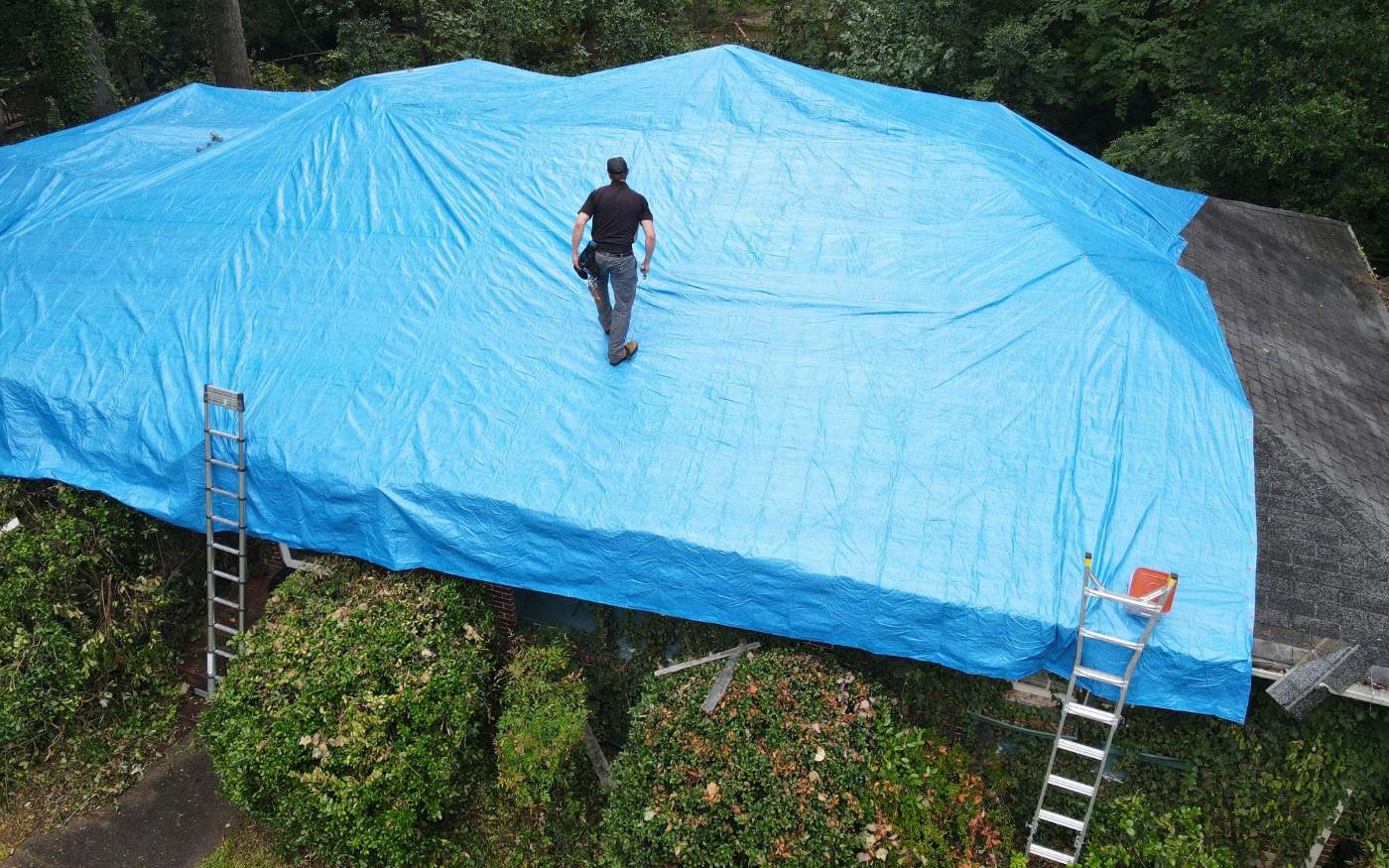
- Emergency tarping when water is coming in, approved by you in writing.
- No pressure on timing beyond your policy's deadlines.
Why local matters.
Your workmanship warranty is only as good as the company behind it. Mosaic is an Atlanta-based, partner-led roofing company with 130+ five-star Google reviews, an A+ BBB rating, and fully insured crews. We're GAF Certified, a Duro-Last Authorized Dealer and an ASTEC Authorized Contractor, and we'll be here when you call about a roof we put on.
See our certifications, warranties and reviews, or book a free storm inspection.
Is it illegal for a roofer to pay my deductible?
Waiving, covering or rebating your deductible is insurance fraud. A legitimate contractor will never offer it.
Can I cancel a roofing contract if my insurance denies the claim?
In Georgia, for contracts paid by insurance, you can cancel before midnight of the fifth business day after your insurer notifies you in writing that all or part of the claim isn't covered. The contractor must give you a cancellation notice with the contract.
Can a roofer talk to my insurance company for me?
A roofer can inspect, document damage and do the approved work, but in Georgia a residential roofing contractor can't represent you or negotiate your claim. A licensed public adjuster or attorney can.
How do I know if a roofer is insured?
Ask for a certificate of insurance showing general liability and workers' compensation, then call the insurance agent listed to confirm it's current.