Why chimneys and skylights leak
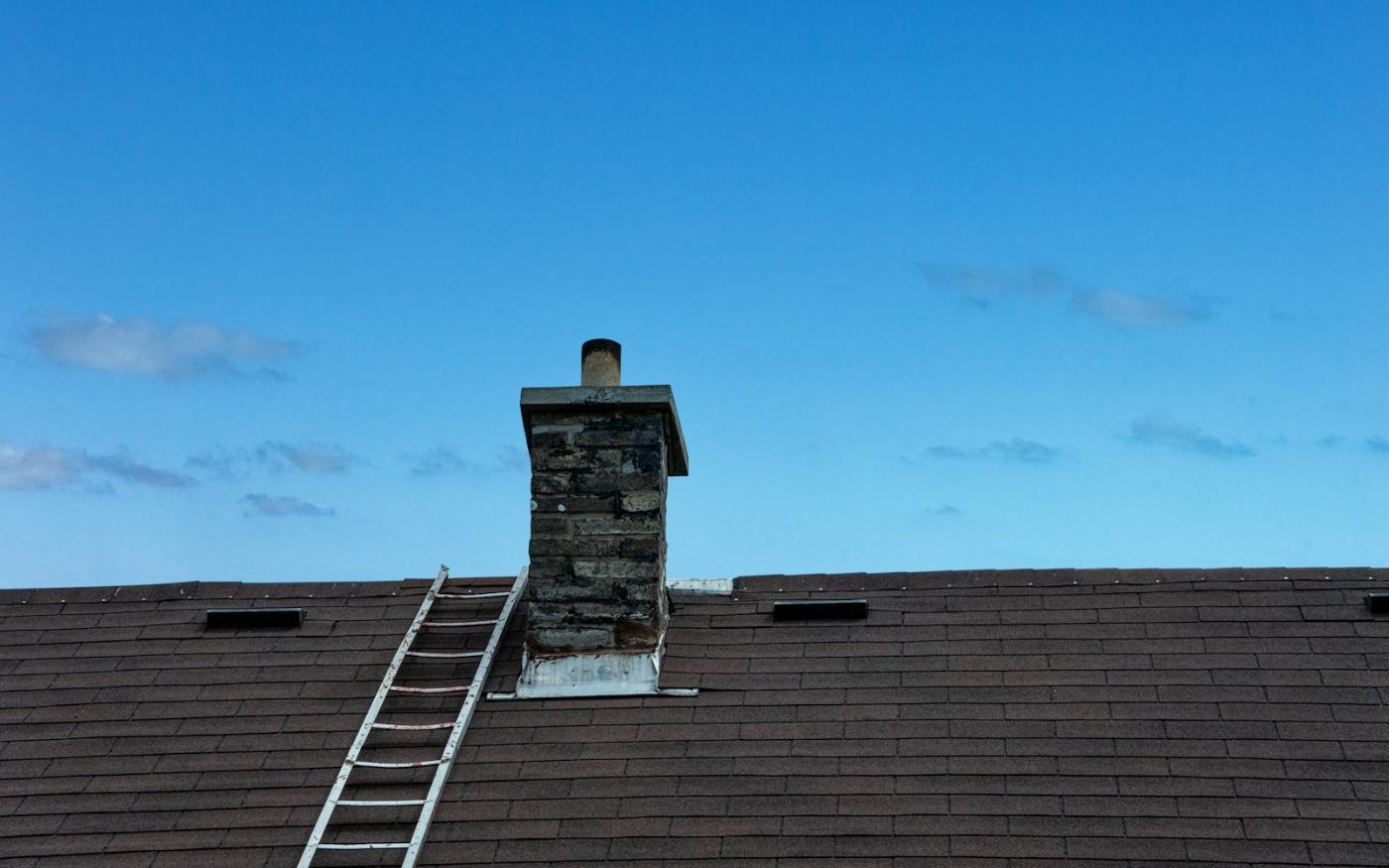
A chimney or skylight cuts a hole in the roof, and the only thing keeping water out is the metal around it. In older Atlanta homes that flashing is often original, rusted through, or was patched with caulk or roofing tar years ago. Water gets behind it, runs down the framing, and shows up as a ceiling stain — sometimes several feet away.
How we repair a chimney leak
- Step flashing woven in with each course of shingles up the sides
- Counter flashing cut into the mortar joints so water can't get behind it
- A cricket on the uphill side of wide chimneys so water and leaves don't pond against the brick
- Crown and cap repair when water is entering from the top of the chimney
If the leak is coming through the brick itself, we'll tell you — that's masonry work, and we'll point you to the right fix.
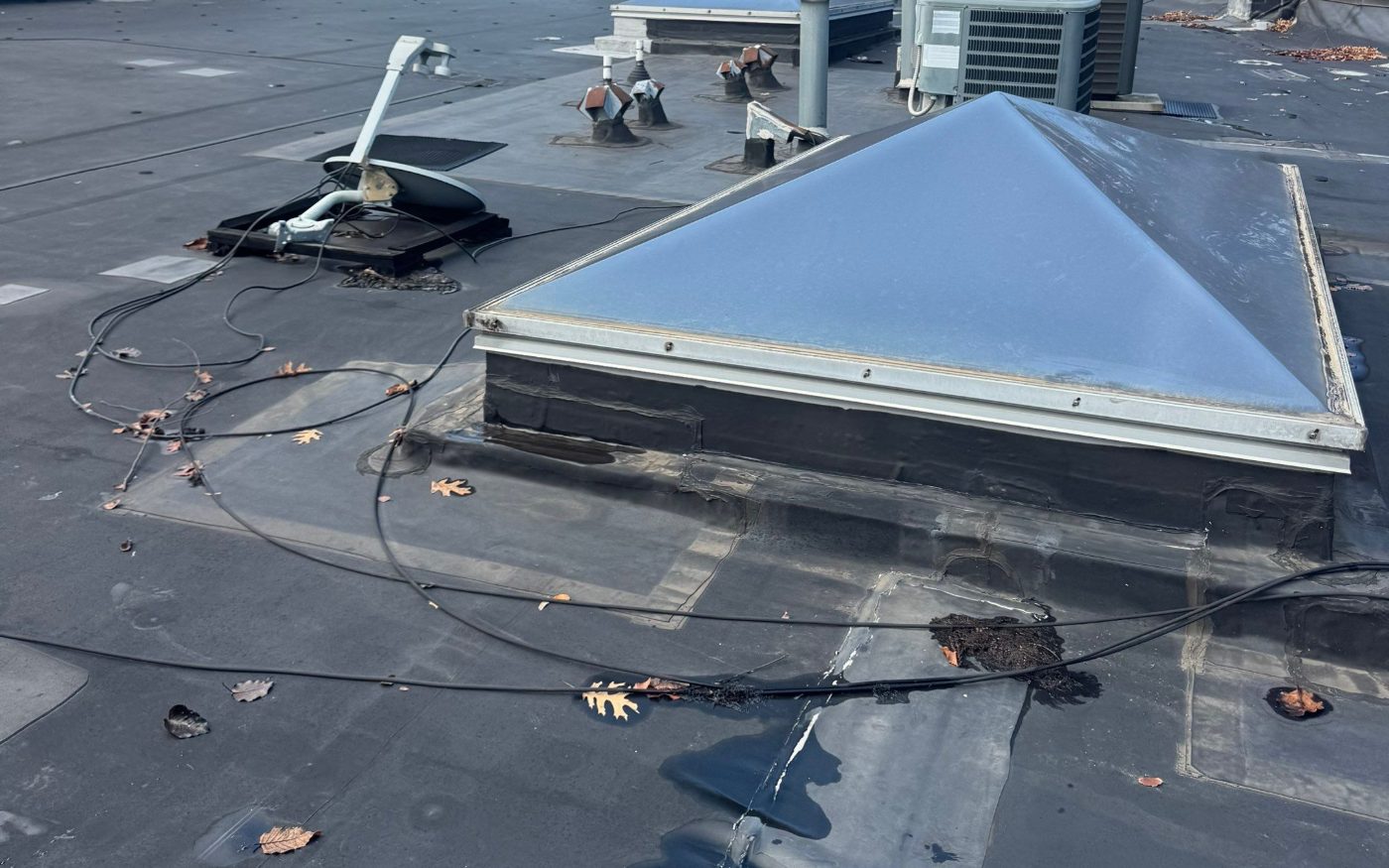
Skylights
If the skylight unit is sound, we re-flash it with a proper kit. If the glass seal has failed, the frame is fogged or cracked, or it's an older bubble-style unit, replacing it during the repair usually costs less than repairing twice. During a roof replacement, it's the best time to swap old skylights.
Frequently asked questions
Can't you just caulk it?
Caulk can stop a leak for a season, but it breaks down in the Georgia sun. We use caulk only as a backup to proper metal flashing.
Do I need a new roof to fix chimney flashing?
No. Flashing can almost always be replaced as a repair, with shingles around the chimney removed and re-laid.
Is a chimney leak covered by insurance?
Wear and tear usually isn't. Damage from a storm — like a limb strike or wind-lifted flashing — may be. We'll tell you which it looks like.