Where copper shines
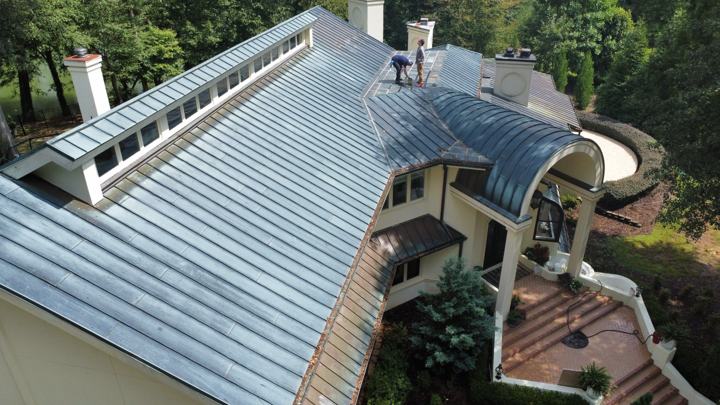
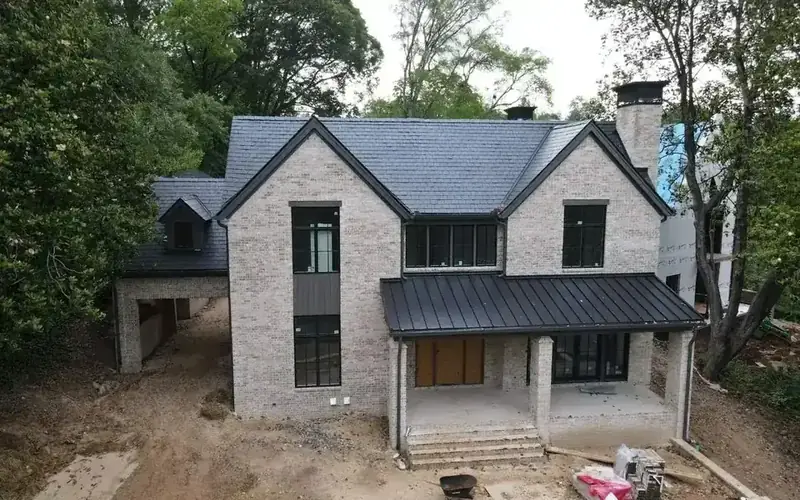
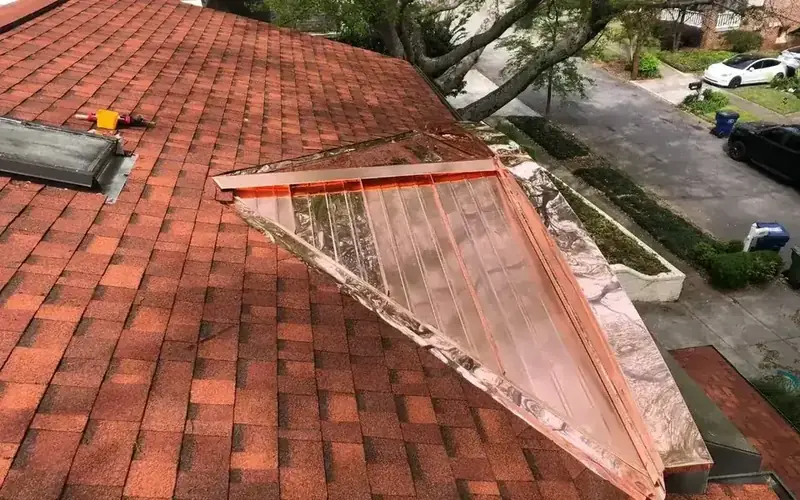
Most of the copper we install is accent work: a bay window over a shingle or slate main roof, an entry porch, a dormer, a turret cap. Done right, those details define the look of the house — and outlast everything around them.
Domes and turrets
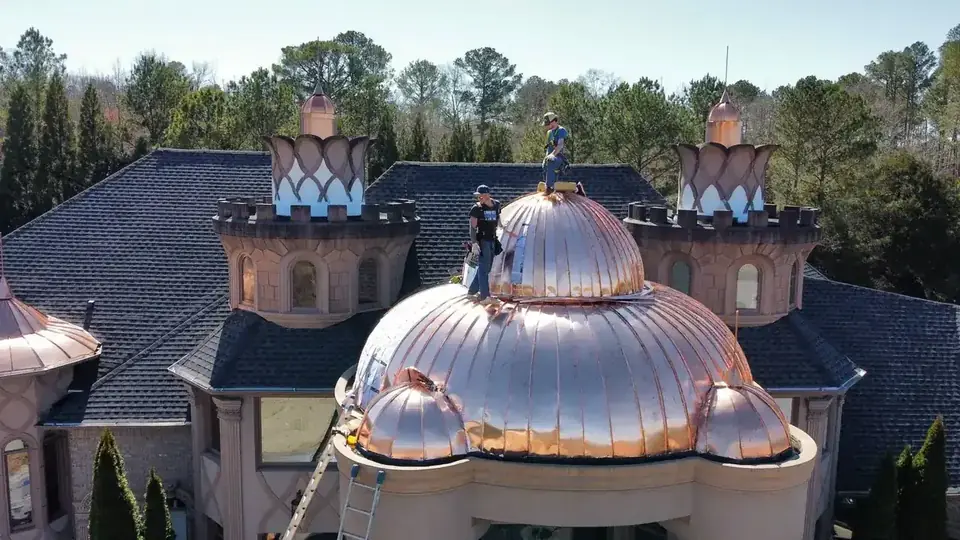
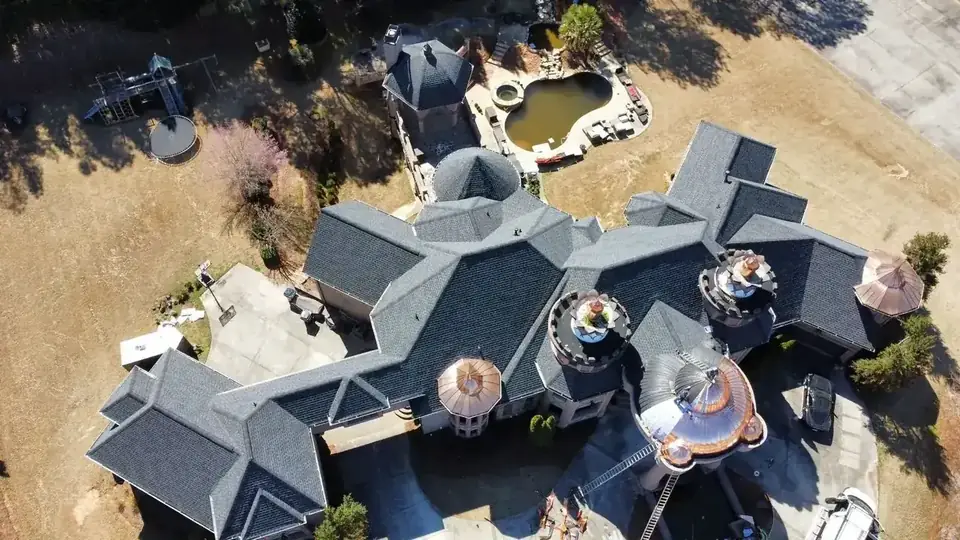
Curved copper is where craft shows. Every panel on a dome or turret is cut and formed to a taper on site, then seamed panel by panel so the lines run true from the base to the finial. We build the underlayment and edge details first so the copper sheds water cleanly at every curve — and we do it alongside the main roof, so the whole house is one coordinated system.
Craft matters
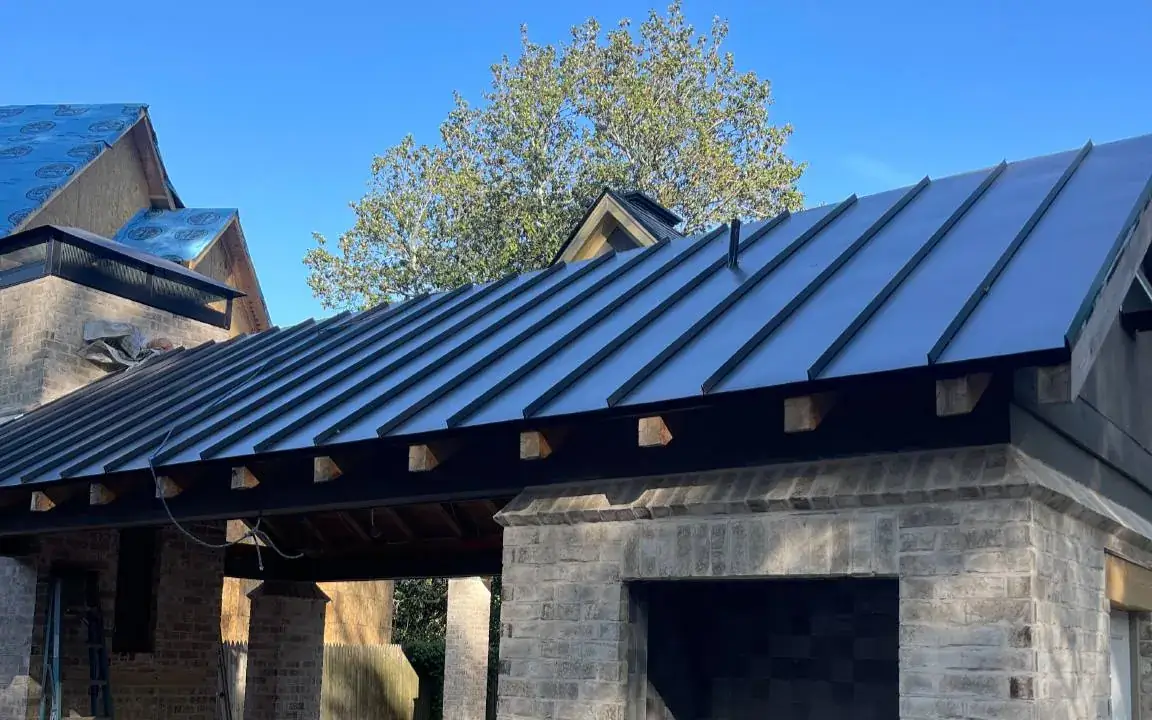
Copper moves with temperature and must be fastened with compatible materials to avoid galvanic corrosion. Seams, cleats and soldered details are built by hand. We pair copper with slate, tile and standing seam on custom homes.
Patina
New copper is bright, turns brown within months, and develops its green patina over many years depending on exposure. We'll talk through what to expect for your home's orientation.
Frequently asked questions
How long does copper roofing last?
Properly installed copper routinely lasts 70–100 years or more.
Can you repair existing copper?
Yes — including re-soldering seams and replacing damaged panels or flashing.
Can you build curved copper domes and turrets?
Yes. We hand-form tapered standing seam panels on site for domes, turrets and cupolas, and finish them with copper finials and caps.
Do you install copper gutters too?
Yes. We install copper half-round gutters with round downspouts, soldered at the seams, to match copper roofing and accents.
Why does copper turn brown and then green?
Copper oxidizes. It darkens to brown within months and develops a green patina over many years, depending on rain and sun exposure.