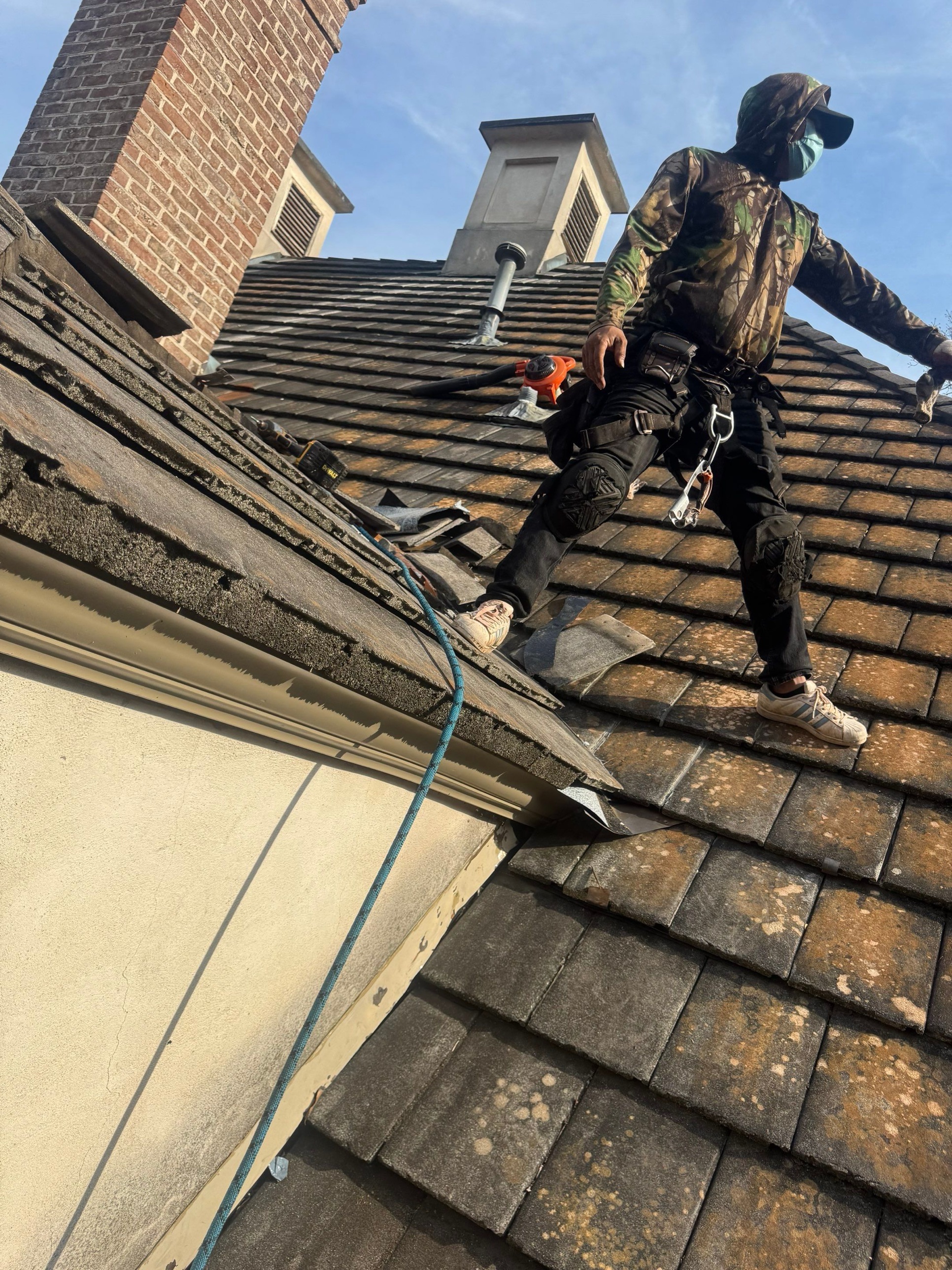
Concrete tile is one of the most durable roofs you can put on an Atlanta home. It shrugs off summer heat, doesn't warp, and when it's installed correctly it can outlast several asphalt roofs. We specialize in concrete and Spanish tile, and we see the same questions from owners again and again. Here are the answers.
What concrete tile is.
Concrete tile is made from sand, cement and water, formed into shapes that look like traditional Spanish or barrel tile. It's usually sealed with a coating for color and water resistance. It looks similar to clay tile, costs less, and is often the choice for homes built in the 1970s through the 2000s.
How heavy it is.
This is the first thing to check. Concrete tile weighs roughly three to four times as much as asphalt shingles. Many homes can carry it without any change, but older framing, or a home that was never designed for tile, may need structural evaluation before a new tile roof goes on. A roofer who can't tell you the weight of your roof and whether your framing supports it should be asked more questions.
How long it lasts.
A well-installed concrete tile roof often lasts 50 years or more. The tile itself rarely fails. What wears out is everything underneath and around it:
- The underlayment dries out and loses its waterproofing over 20 to 30 years.
- Flashing and metal at valleys, walls and chimneys can corrode or pull loose.
- Mortar and ridge caps crack or shift, especially after storms.
- Individual tiles crack from foot traffic, falling limbs or hail.
Knowing which of these is failing is what decides whether you need a repair or a full replacement.
Repair, reset or replace?
Most older concrete tile roofs don't need to be replaced. The usual options are:
- Spot repair. Replacing a few cracked or broken tiles and resealing flashing. This works when the underlayment is still sound.
- Tile reset. The tiles are removed, the underlayment is replaced, and the same tiles are re-laid. This is often the best value on a tile roof that's leaking but whose tiles are in good shape.
- Full replacement. Tile is removed to the deck and replaced, either with new concrete tile or with a lighter composite such as Brava. This makes sense when the decking is damaged or the tile is badly broken or faded.
A tile reset is usually far less than a full replacement, and it keeps the roof you already have.
Concrete tile or Brava?
Brava composite tile gives the look of Spanish tile, slate or shake in a much lighter, impact-resistant material. If your home's framing can't carry heavy tile, or you're replacing a failing concrete roof, Brava is often the smarter choice. If you love the weight, texture and look of concrete and your structure supports it, concrete is still an excellent roof.
What drives the cost.
Concrete tile pricing depends on roof size and pitch, the tile profile you choose, how many layers of tile come off, decking repairs, underlayment type, and the complexity of valleys, dormers and penetrations. Ask for a written, itemized proposal so you can compare apples to apples.
Can I walk on a concrete tile roof?
Not safely. Tile cracks under foot traffic, so we don't recommend it. Repairs and inspections should be done by a crew trained to work on tile.
Is a concrete tile roof worth repairing?
If the tiles are sound and the underlayment is the problem, a reset can cost far less than replacing the roof and gives you years more service. We inspect the roof, show you photos of what we find, and give you a written recommendation.