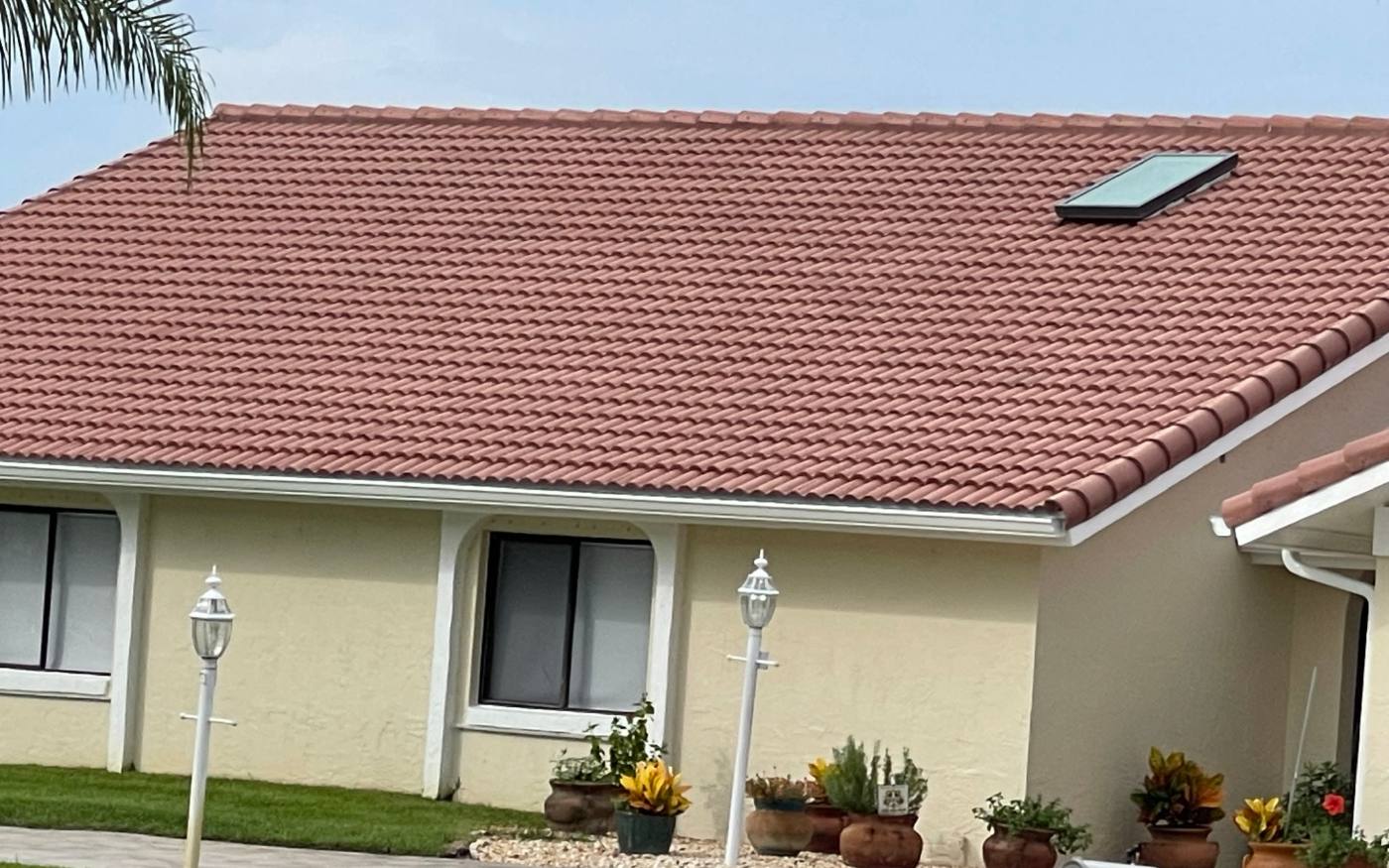
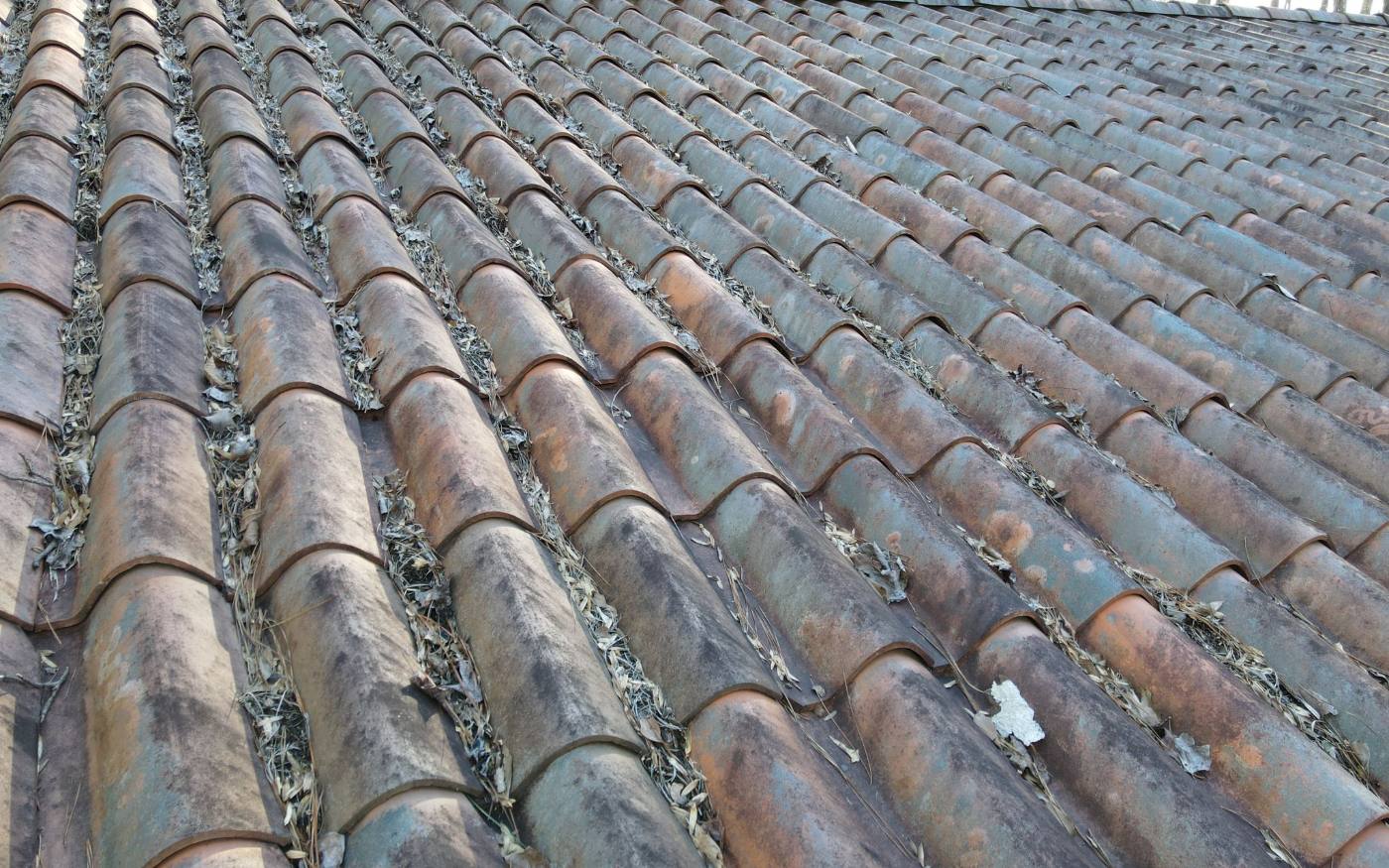
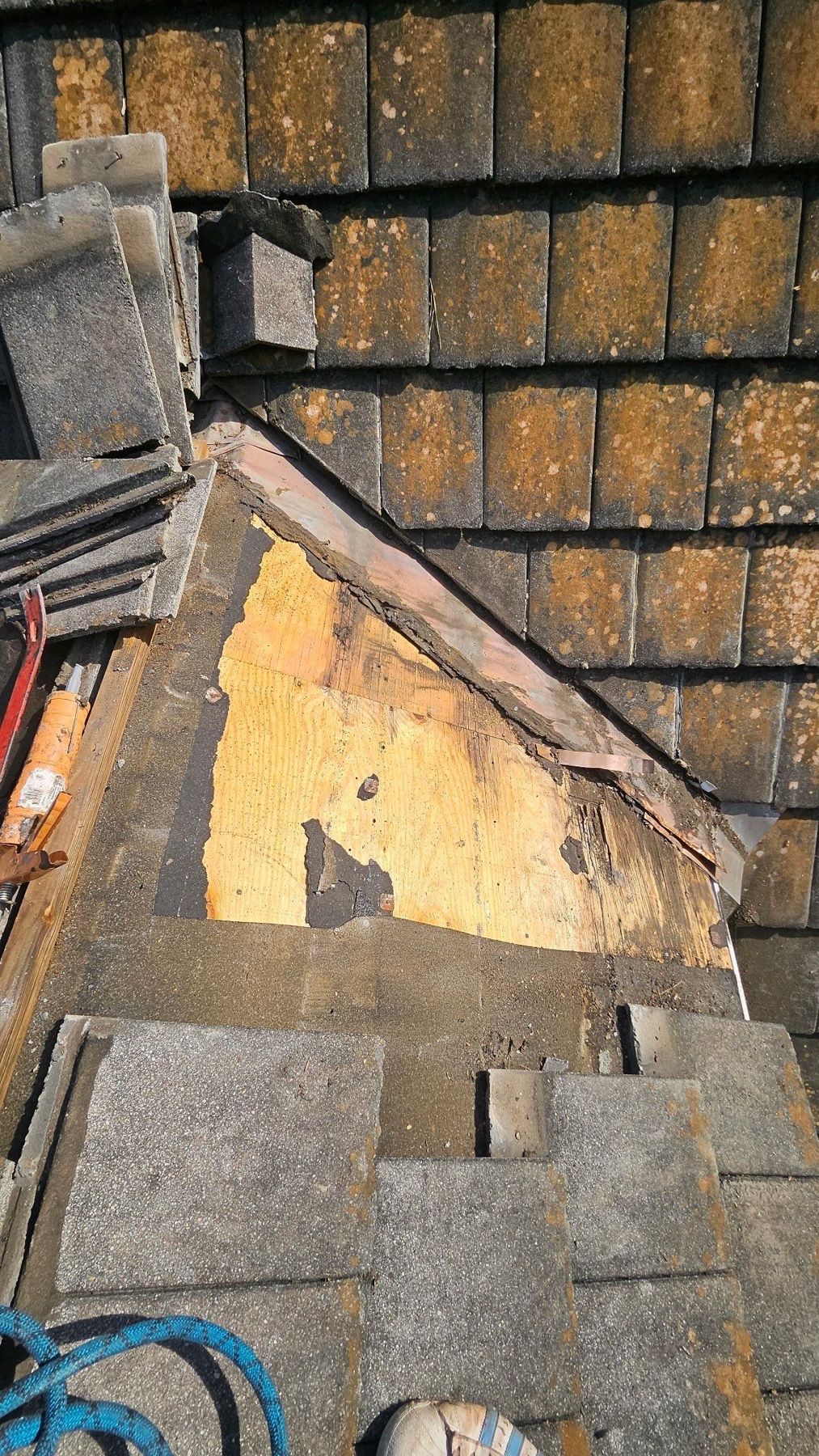
The underlayment problem
On older tile roofs, the tile is often fine while the underlayment beneath has dried out and failed. That's when leaks start — often 25–40 years in. Many roofs can be fixed by removing the tile, replacing the underlayment and flashings, and resetting the original tile.
Brava composite tile
Brava offers the look of Spanish tile, slate or shake in a lighter, impact-resistant composite. It's a strong option when a home's framing can't carry heavy tile, or when replacing a failing concrete tile roof.
Why tile roofs leak
Tile itself can last 50 years or more. The waterproofing layer underneath usually doesn't. On many older concrete and clay tile roofs in metro Atlanta, the tiles look fine while the underlayment beneath them has dried out, cracked and stopped shedding water. Broken tiles from foot traffic, fallen limbs and failed flashing at walls and valleys are the other common leak sources.
Lift-and-relay: new underlayment, same tile
When the tiles are sound but the underlayment has failed, the best value is often a lift-and-relay. We remove the tile carefully, stack and protect it, install new high-temperature underlayment and new flashing, replace any broken pieces and relay the original tile. You keep the look of your house and get a new waterproofing system underneath.
If the tile itself is failing, we'll show you replacement options - new concrete or clay tile, or a lighter alternative such as Brava composite tile, which gives the same look at a fraction of the weight.
Clay vs. concrete tile
- Clay holds its color permanently and is the traditional Spanish look. It's more brittle underfoot.
- Concrete is heavier and more affordable, comes in many profiles, and its color can fade over decades.
- Composite (Brava) is lightweight, very impact-resistant and doesn't need the structural support heavy tile does.
Matching discontinued tile profiles is a common challenge on older homes. We source salvage and compatible tiles where possible and tell you upfront when a perfect match isn't available.
Keeping a tile roof healthy
- Have the roof inspected every few years and after major storms - from the ground, broken tiles are hard to see.
- Keep valleys and gutters clear of leaves and pine needles so water doesn't back up under the tile.
- Trim overhanging limbs before they fall or scrape.
- Never let unqualified trades walk the roof for satellite, solar or HVAC work without protecting the tile.
- Replace cracked or slipped tiles promptly so the underlayment isn't exposed to sun.
Tile roofs in metro Atlanta's established neighborhoods
Many of the concrete and clay tile roofs we work on in Buckhead, Sandy Springs, Dunwoody and other established neighborhoods were installed 25 to 40 years ago. The tile often has decades left, but the original felt underlayment has reached the end of its life, and the flashing at chimneys, walls and valleys has started to fail. These roofs usually start leaking in one spot, then several, after a heavy storm.
The right fix depends on the condition of the tile, the underlayment and the decking underneath. We inspect from the attic and the roof, test-lift tiles in suspect areas, and give you clear options: targeted repairs, a lift-and-relay with new underlayment, or a full replacement with new tile or Brava composite.
What a tile roof inspection covers
- Broken, cracked, slipped and missing tiles, photographed and counted.
- Underlayment condition under test-lifted tiles in valleys, at eaves and around penetrations.
- Flashing at chimneys, walls, skylights and valleys.
- Ridge and hip caps, mortar and fasteners.
- Attic signs of leaks, stained decking and ventilation.
- Whether matching tile is available for repairs.
Frequently asked questions
Can I walk on my tile roof?
We don't recommend it — tile cracks easily under foot traffic. Let us inspect it.
Is concrete tile worth repairing?
If the tiles are sound and the underlayment is the problem, a reset can be much less than a full replacement.
Can you walk on a tile roof?
Only if you know how. Tile cracks when stepped on in the wrong spot, which is why tile roofs need an experienced crew.
Can you repair just a few broken tiles?
Yes. We replace broken tiles and check the flashing and underlayment around them so the repair lasts.
Is a tile roof too heavy for my house?
Existing tile homes were built for it. If you're switching from shingles to tile, the framing needs to be checked first - or consider Brava composite tile, which weighs far less.
Will insurance cover a tile roof damaged by a storm?
Storm damage like broken tiles from hail or falling limbs is often covered, while worn-out underlayment from age usually isn't. We document the cause of the damage so your insurer can decide.
How long does tile roof underlayment last?
It depends on the type. Older felt underlayments commonly last around 20 to 30 years in Georgia's heat; modern high-temperature synthetic and self-adhered underlayments are rated to last much longer.