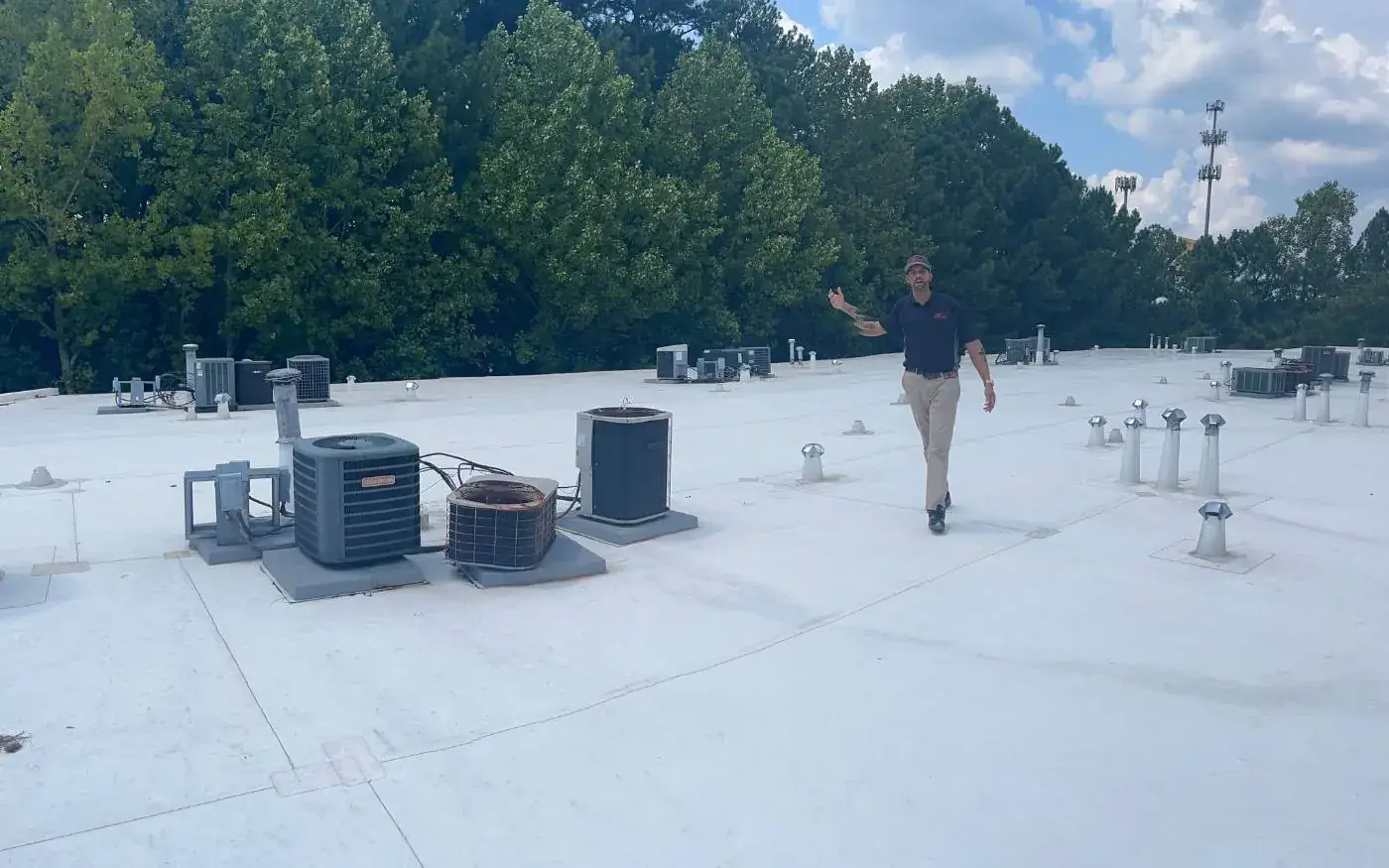
Why TPO
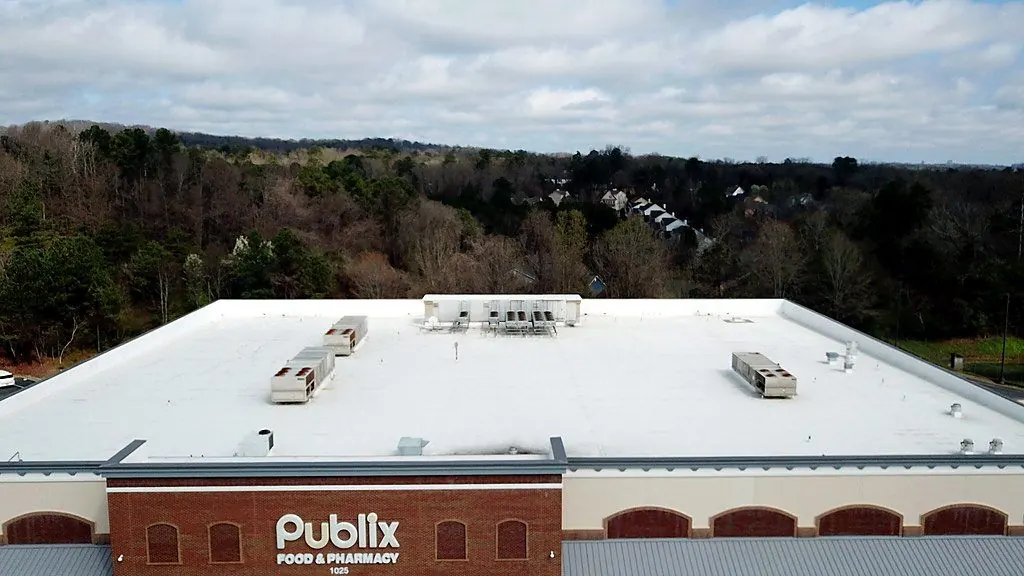
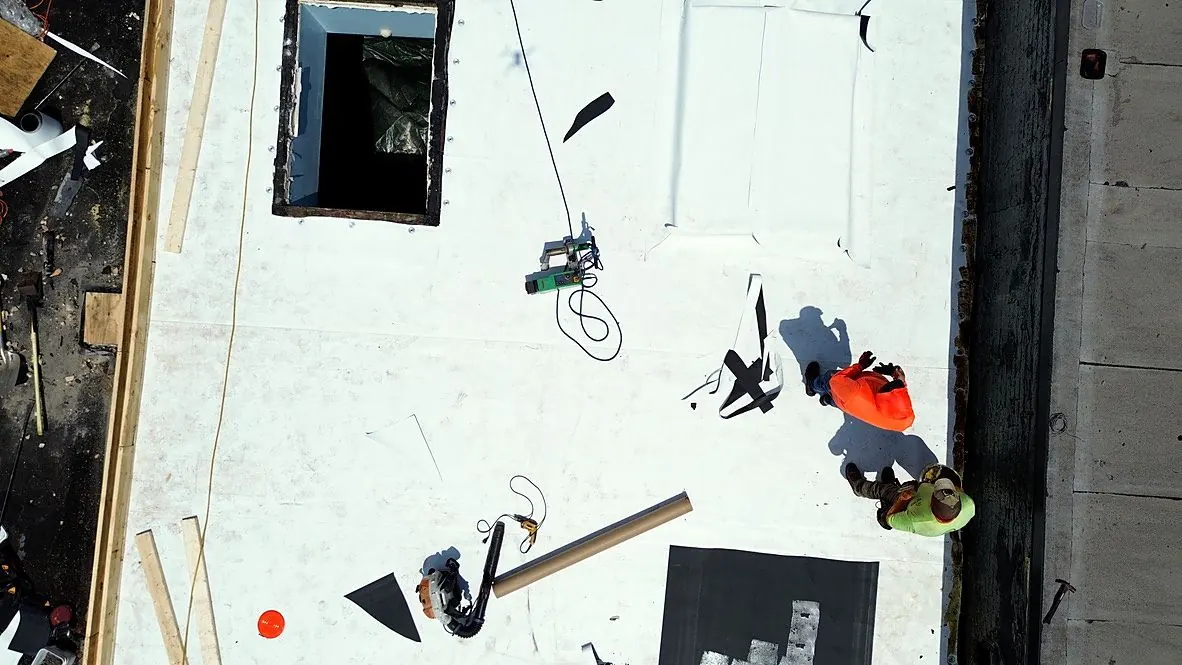
TPO seams are welded with hot air into a single continuous membrane, stronger than taped or glued seams. The white surface reflects sun, which helps cooling costs in Atlanta summers.
How we install it
- Tear-off of failed roofing and wet insulation
- Tapered polyiso insulation designed to drain
- Cover board where the system calls for it
- 60-mil GAF EverGuard TPO, fully adhered or mechanically attached
- Welded flashings at walls, curbs and penetrations
- New edge metal, scuppers and drains as needed
Residential flat roofs too
Porches, additions and modern homes with low-slope sections get the same membrane and the same details.
TPO repairs and maintenance
Most TPO problems show up at the details: welded seams that weren't fully fused, flashings pulling away at walls and curbs, punctures from foot traffic around rooftop units, and ponding water at clogged drains. We probe-test seams, re-weld or patch where the membrane is still sound, and clear drains and scuppers. A twice-a-year inspection catches most of these before they become leaks inside.
What our TPO warranty covers
Our TPO roofs use GAF EverGuard 60-mil membrane with a 20-year GAF material warranty and Mosaic's 10-year workmanship warranty. The workmanship warranty covers our installation, including welds, flashings and edge details.
What TPO is and where it fits
TPO is a single-ply membrane that's heat-welded at the seams, which makes it a strong choice for low-slope commercial roofs. It reflects heat well, which matters in Atlanta summers, and it's available in white and other colors.
Our TPO process
- Tear-off or overlay. We evaluate whether the existing roof can take an overlay or needs to come off.
- Insulation. Tapered polyiso insulation is installed to direct water to the drains.
- Membrane. The TPO membrane is welded seam by seam with a hot-air welder and tested.
- Flashing and details. Edges, curbs, penetrations and drains are flashed with membrane that matches the field.
Where TPO roofs fail
Most TPO problems start at the edges, the flashings around curbs and drains, and seams that weren't welded at the correct temperature. Those are the details we inspect first, and they're the ones to ask about when comparing bids.
Frequently asked questions
How long does a TPO roof last?
A well-installed 60-mil TPO roof commonly lasts 20–30 years.
TPO or PVC?
TPO is the better value for most buildings. PVC is the better choice where grease, chemicals or the strongest warranty matter, like restaurants.
What warranty comes with a Mosaic TPO roof?
A 20-year GAF material warranty on 60-mil EverGuard TPO, plus Mosaic's 10-year workmanship warranty.
Can TPO be repaired?
Yes. TPO seams and flashings can be re-welded or patched with new membrane as long as the existing membrane is clean and still sound.
Is TPO good for a residential flat roof?
Yes. It's a solid choice for porches, additions and modern low-slope homes, installed with the same details we use on commercial roofs.
Is TPO better than PVC?
Both are heat-welded single-ply membranes. PVC is often chosen for chemical resistance and longer service life. TPO is often chosen for cost and heat reflectivity. We'll compare them for your building.
Can TPO go over an existing roof?
Sometimes. A recover over a sound, dry roof can save cost, but wet insulation has to be removed first. We check before recommending it.