First: stop the water
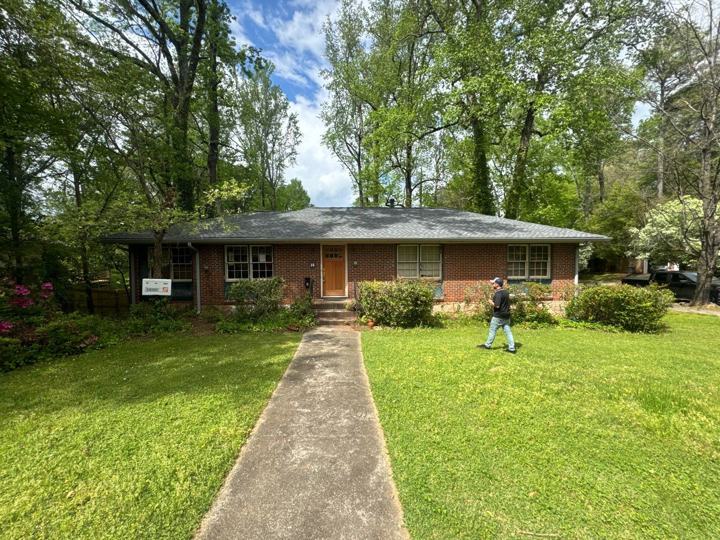
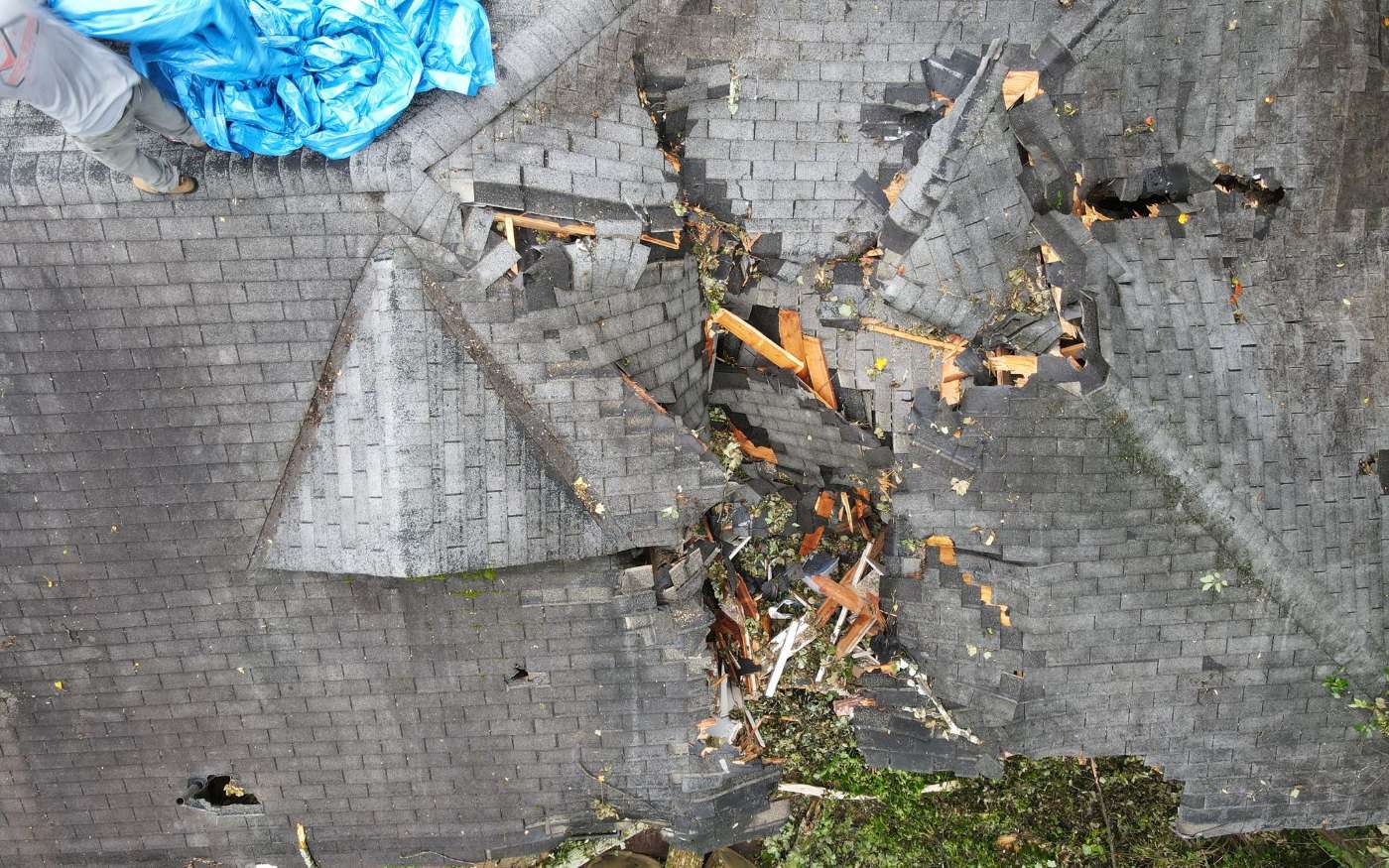
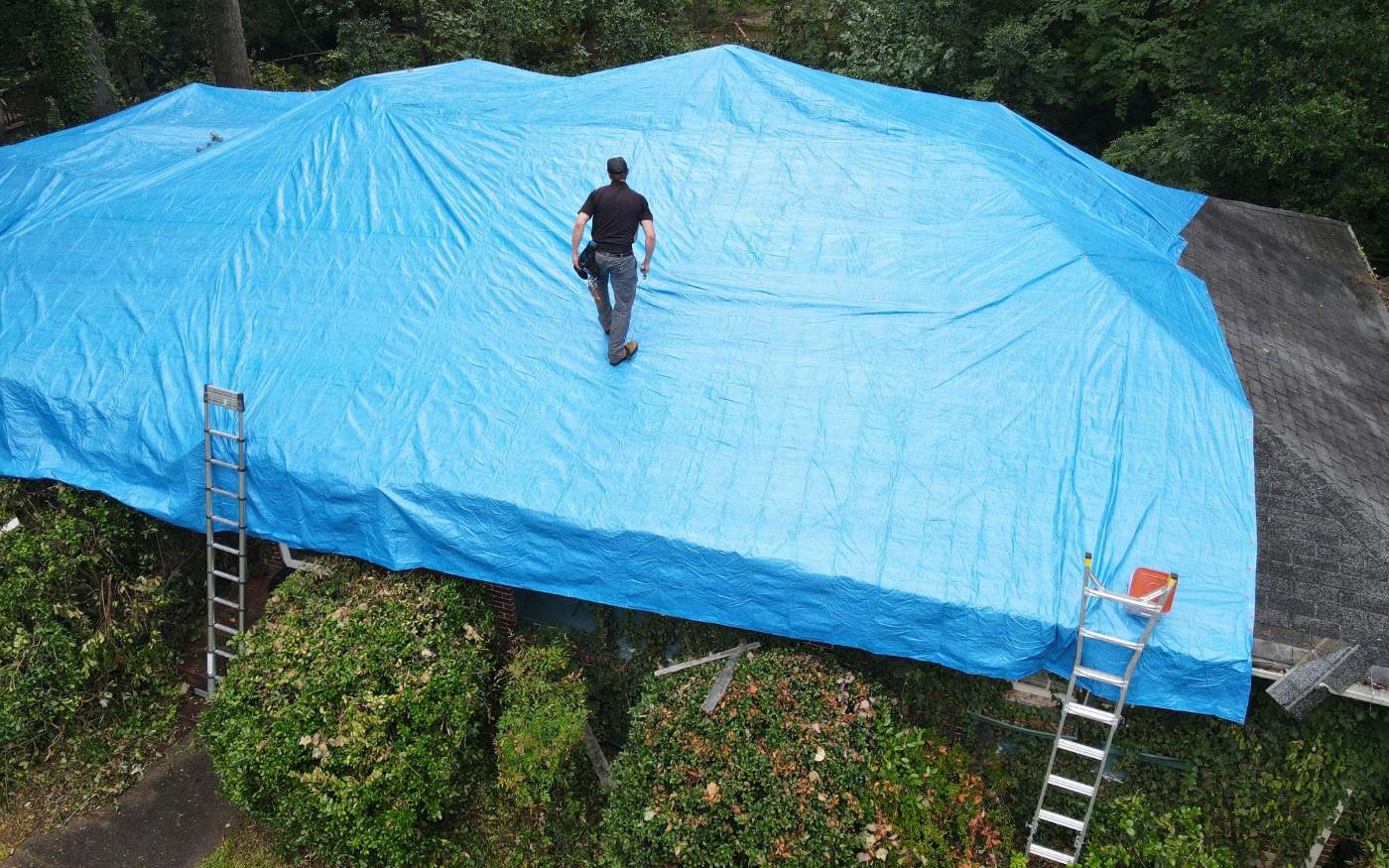
If a limb has come through or shingles are gone, the priority is keeping water out of the house. We tarp the damaged area, remove limbs from the roof, and make sure the home is secure — even if that's at 1 a.m.
Then: document everything
Insurance claims are won or lost on documentation. We photograph every slope, every damaged shingle, every crushed vent and torn flashing, and build the package your adjuster needs. When the adjuster comes out, we're there too.
Then: rebuild it right
Once the claim is approved, we complete the repair or replacement under your policy. If there's interior damage — drywall, insulation, ceilings — we coordinate that restoration too, so you're not juggling multiple contractors.
Atlanta storm season, by the numbers
Metro Atlanta sees severe thunderstorms from early spring through late summer, and 2026 alone has logged more than 25 hail days across the metro plus repeated rounds of damaging wind. Most storm damage isn't dramatic. It's creased shingles, lifted tabs, cracked ridge caps and dented metal that start leaking months later. See every 2026 date on our Atlanta hail storm log and the latest events on recent storms.
Wind, hail and fallen trees - what each one does
- Wind breaks the seal strip under shingles and creases them. A creased shingle can look fine from the driveway but no longer sheds water, and it will tear off in the next blow.
- Hail bruises asphalt shingles, knocks off the protective granules and dents vents, gutters and flashing. Damage usually starts around 1-inch hail. See hail damage repair.
- Fallen trees and limbs can puncture the deck, crack rafters and open the house to water. These need an emergency tarp first, then a structural look before re-roofing.
What to do in the first 24 hours
- Get people and pets away from any sagging ceiling or area under a tree on the roof.
- Take photos and video of the outside and inside damage, with dates.
- Move valuables and catch active drips - but don't go on the roof.
- Call us at (404) 260-3168. We'll tarp the roof and document the damage before anything changes.
- Report the claim to your insurance company. We can be there when the adjuster inspects.
Beware of storm chasers
After big storms, out-of-state crews knock on doors across the metro. Some do fine work; many are gone before your warranty would ever matter. Hire a contractor with a local address, local reviews and a real phone number, get every price in writing, and never let anyone talk you into skipping or 'covering' your deductible - waiving a deductible is insurance fraud. Mosaic is Atlanta-based with 130+ five-star Google reviews.
Frequently asked questions
Should I call my insurance company or a roofer first?
If water is coming in, call us first so we can stop the damage — your policy expects you to prevent further loss. Then file the claim; we'll help with the documentation.
Does homeowner's insurance cover wind and tree damage?
Most policies cover sudden storm damage, including trees falling on the house. Coverage details vary, so we'll review what the adjuster approves line by line.
How long do I have to file a storm claim in Georgia?
It depends on your policy — many require prompt notice and set a deadline of one to two years from the date of loss. Check your policy or call us and we'll help you figure it out.
Do you offer emergency tarping?
Yes, 24/7. We tarp the damaged area to stop water from getting in, document everything with photos, and then schedule permanent repairs.
A tree fell on my roof. What should I do first?
Get everyone out of the rooms under the impact area, then call a tree service to remove the weight and call us to tarp and assess the structure. Take photos before anything is moved - your insurer will want them.
Can storm damage show up weeks later?
Yes. Creased shingles and hail bruises often don't leak until the next heavy rain or the next storm. That's why a free inspection after a significant storm is worth it even if you don't see a leak.