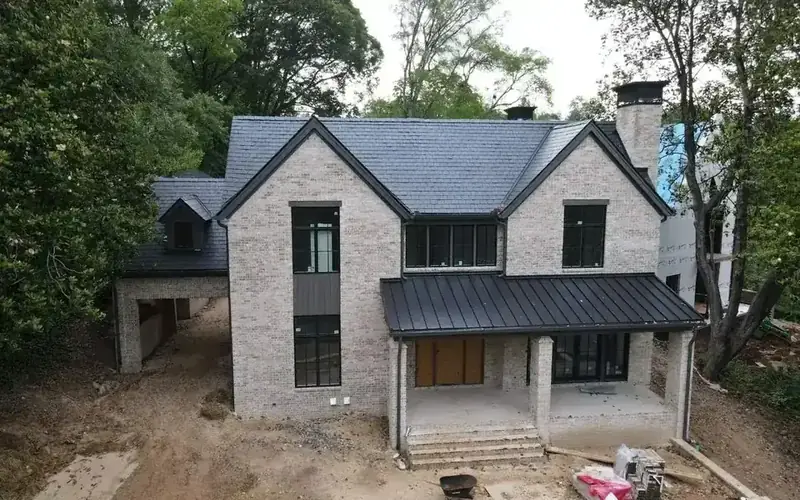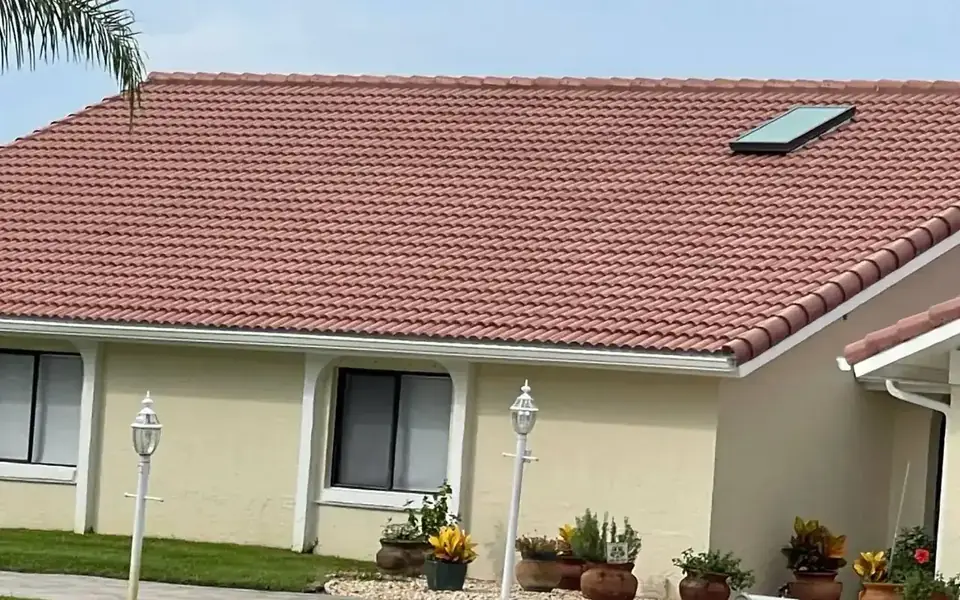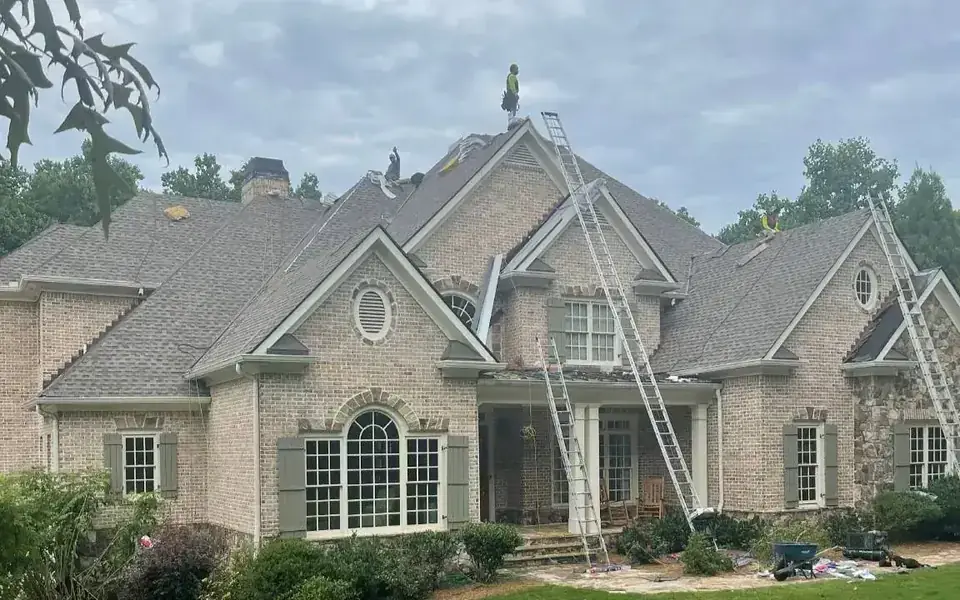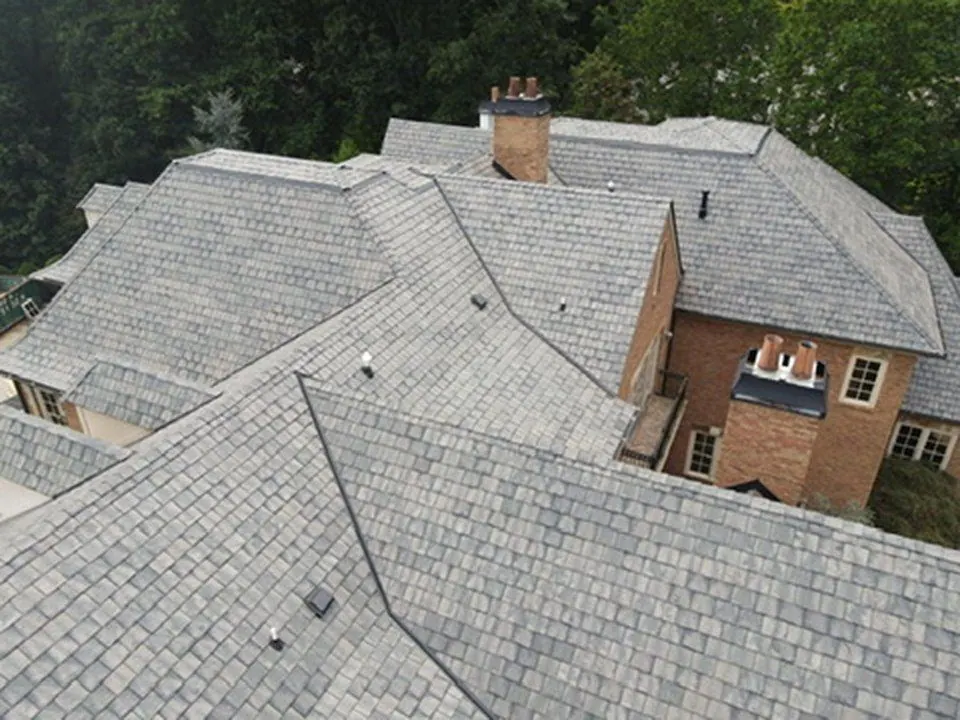
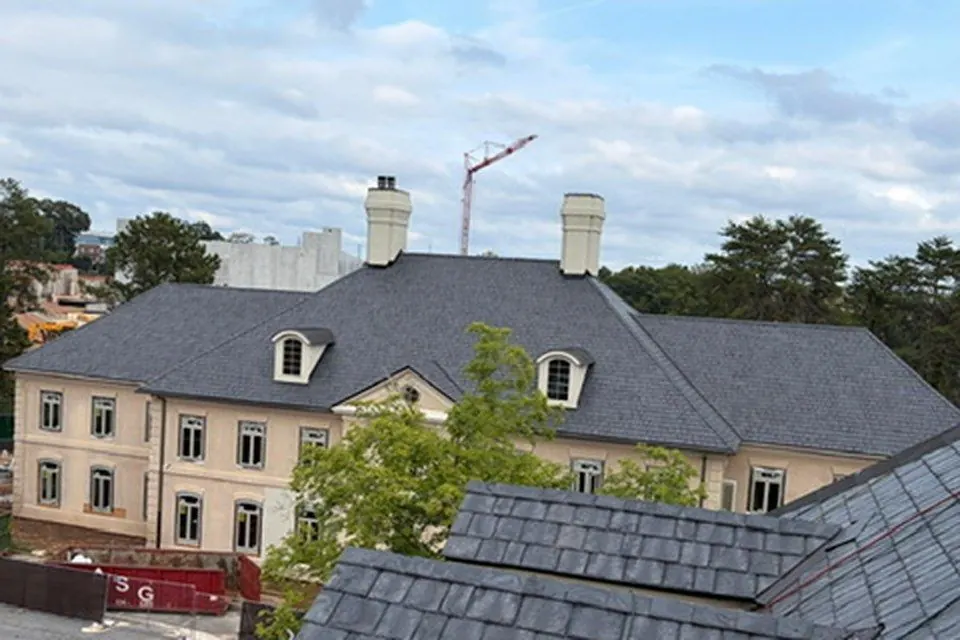
Why homeowners choose Brava
- Weight. Natural slate and concrete tile are heavy. Brava gives the same look without needing extra structural support.
- Impact. Composite tiles flex instead of cracking under hail and foot traffic.
- Consistency. No broken pieces in the pallet and no hunting for matching reclaimed material.
- Look. Molded from real slate, tile and shake, with blended colors so the roof doesn't look uniform.
Where we use it
Replacing 30- and 40-year-old concrete tile roofs where the underlayment has failed and many tiles are cracked. Homes that want a slate look on a budget closer to premium metal. Additions where the main house is slate or tile and the new section needs to match without heavy framing.
Installed like a premium roof
Brava goes over solid decking with high-temperature underlayment, and the details, valleys, ridges, walls and chimneys, get the same care we give slate and copper. We'll bring samples so you can see the profiles and colors against your house.
Frequently asked questions
Does Brava look fake?
From the street, most people can't tell. Up close it's clearly a molded product, but far better looking than older synthetics.
How does the cost compare?
Typically more than architectural shingles and standing seam, and less than natural slate. We'll quote options side by side.
Can Brava replace my concrete tile roof?
Yes, it's one of the most common reasons we install it.
Is Brava good in hail?
Brava composite tiles are built for impact resistance and flex rather than crack, which is one reason homeowners in hail-prone areas choose it over clay or concrete tile.