When an adjuster climbs onto your roof after a hailstorm, they're not guessing. Most follow a fairly standard method, and the outcome of your claim often comes down to whether the damage on your roof is clearly documented and clearly tied to a storm.
Here's what they look for, and how to make sure nothing gets missed.
1. A storm date that lines up.
The first question is whether a storm capable of damaging your roof actually hit your address. Adjusters check weather records: hail reports logged by the National Weather Service, severe thunderstorm warnings, and radar hail estimates.
Ground-confirmed reports carry the most weight. Radar estimates help, but they're estimates. Either way, the physical damage on your roof is what proves the claim. You can see every 2026 hail date for metro Atlanta, and how strong the evidence is for each, on our 2026 Atlanta hail storm log.
2. Test squares on each slope.
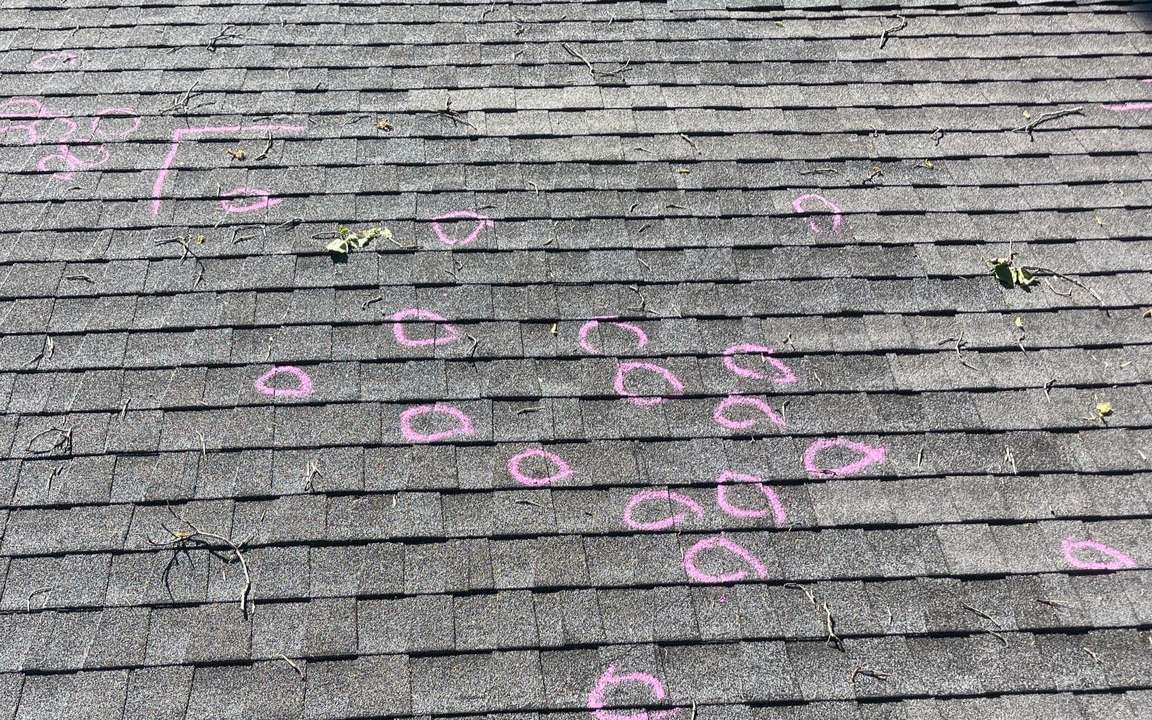
Many adjusters mark a 10-foot by 10-foot test square on each slope that faced the storm and count the hail hits inside it. Carriers use the count to decide whether a slope needs to be replaced or can be repaired. Thresholds vary by carrier and policy.
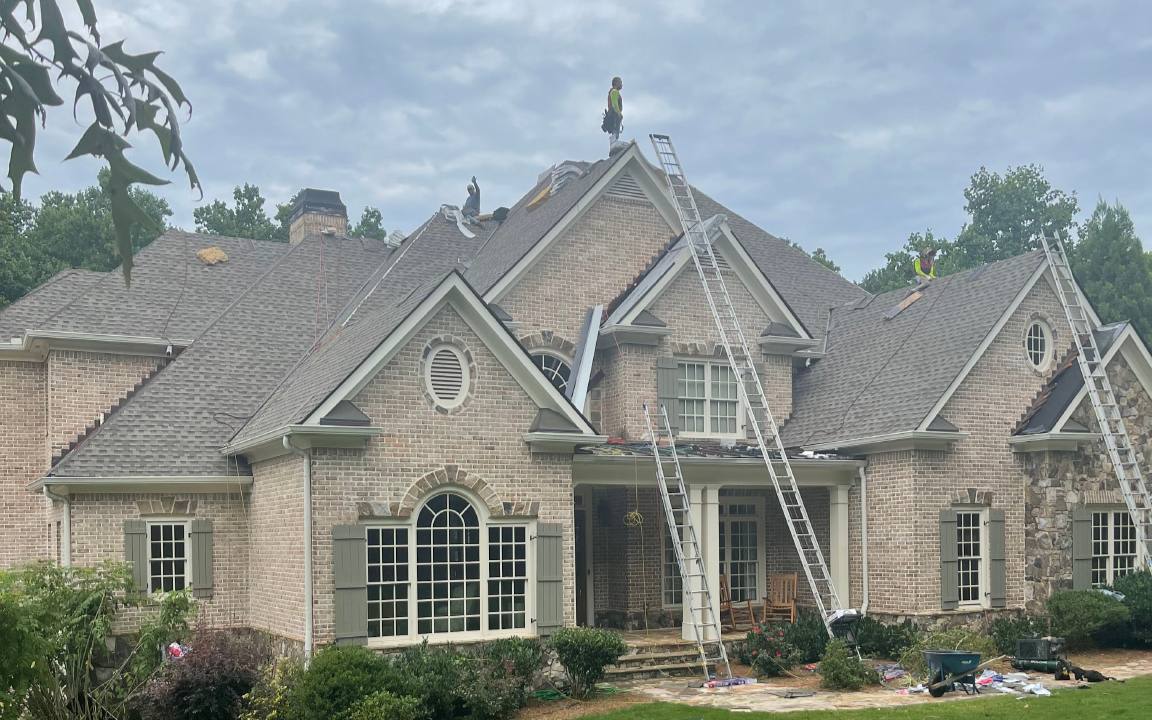
Wind-driven hail usually hits the slopes facing the storm hardest, so it's common for some slopes to qualify and others not to. That's why every slope should be inspected, not just the one that's easiest to reach.
3. Real hail hits, not look-alikes.
This is where claims get won or lost. Adjusters are trained to separate hail damage from things that look similar:
- Hail bruise: a soft spot where the shingle mat is fractured, often with granules knocked loose in a roughly circular pattern. Pressing on it, you can feel the give.
- Blistering: small raised bubbles that pop and leave pits, caused by manufacturing or heat, not hail.
- Mechanical damage: scuffs from foot traffic, tools or tree limbs.
- Normal wear: granule loss spread across the whole roof from age.
A good inspection marks each true hit, photographs it close up and in context, and leaves the look-alikes alone. Calling everything hail hurts credibility.
4. Soft metals and collateral damage.
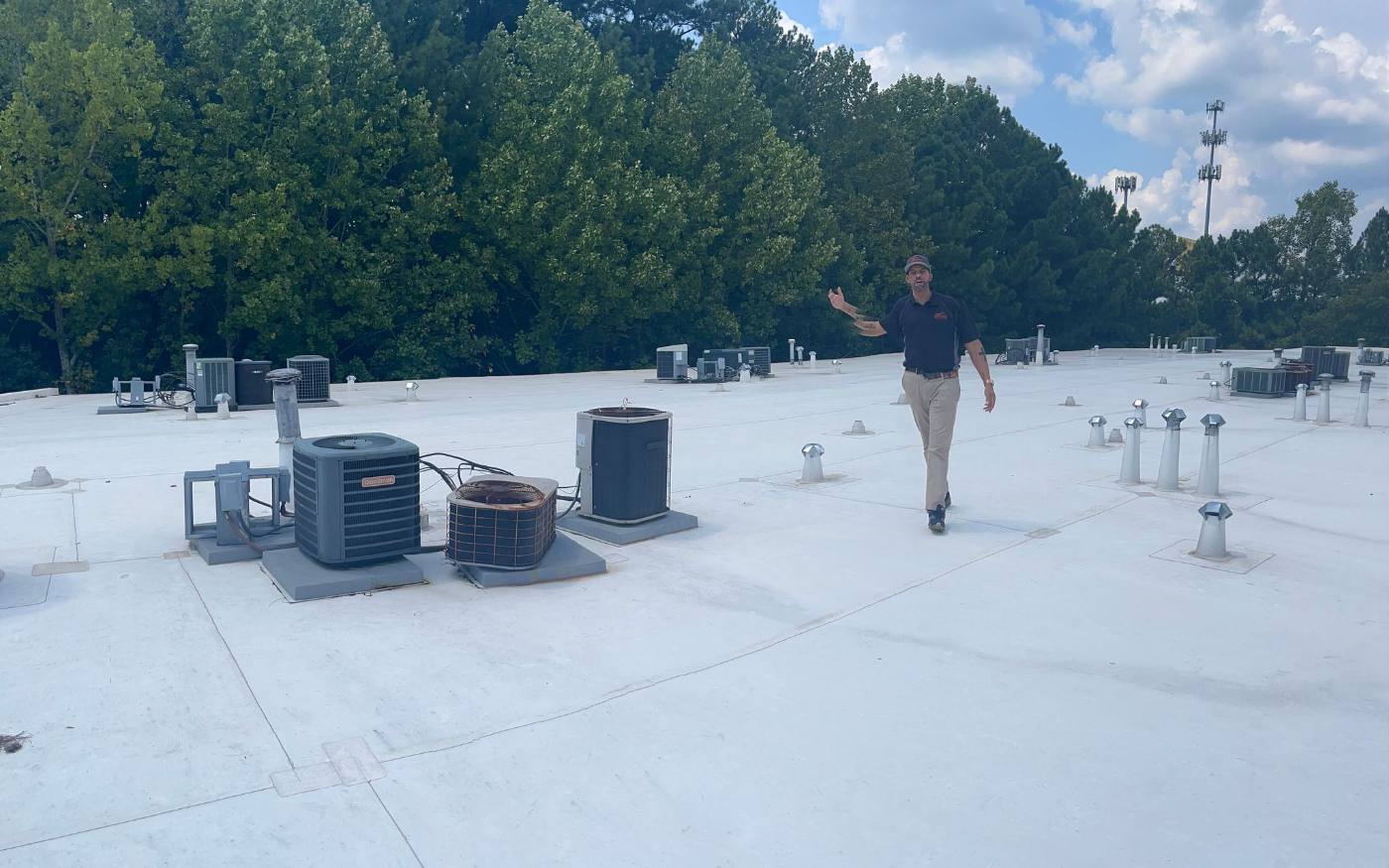
Before they count shingle hits, many adjusters look at the soft metals: ridge vents, box vents, pipe jacks, gutters, downspouts, flashing and the AC unit's fins. Hail dents these easily, and the size and spacing of the dents show how big the hail was at your house.
They'll often check other things on the property too: window screens, painted wood, fences, mailboxes and spatter marks on decks. This "collateral damage" backs up the timeline.
5. Shingle type, age and availability.
Adjusters note what's on your roof and how old it is. That matters for depreciation, and for matching. If your shingle has been discontinued, a repair may not be possible without a mismatched patchwork. The shingle's make, model and availability belong in your documentation so the carrier has the facts when deciding how much of the roof is covered.
6. Interior damage.
If water got in, adjusters will look at ceilings, walls, insulation and the attic. Take photos of stains and drips as soon as you see them, with dates.
What helps a claim.
- Prompt reporting. Most Georgia homeowner policies give you 12 months from the storm date to file, and some allow more. Check your policy, and don't wait. The longer damage sits, the harder it is to tie to a specific storm.
- A documented inspection before the adjuster arrives. Every slope walked, every hit marked and photographed, soft metals documented.
- Being there for the inspection. You can ask the adjuster to look at specific areas and ask how they reached their conclusions.
- Getting the estimate in writing, and reading it line by line.
What hurts a claim.
- Waiting so long that a newer storm muddies the record.
- Exaggerating damage or calling wear and tear "hail."
- Anyone offering to "cover" or waive your deductible. That's insurance fraud and can sink the whole claim.
- Missing items, like drip edge, ridge caps or vents, that never get photographed.
If the claim is denied or comes up short.
You're entitled to a copy of the adjuster's estimate and the reasons for a denial. If you believe damage was missed, you can request a re-inspection and provide additional photos and documentation. If you need someone to negotiate on your behalf, that's the role of a licensed public adjuster or an attorney.
Georgia law also protects you when you sign a roofing contract that will be paid by insurance: you can cancel it before midnight of the fifth business day after your insurer tells you in writing that all or part of the claim isn't covered.
Where Mosaic fits in.
We're a roofing contractor, not a public adjuster or a law firm, so we don't negotiate your claim. What we do is give you and your insurer the clearest possible picture of your roof: a free slope-by-slope inspection, marked and photographed hits, soft-metal documentation and the shingle details. The inspectors we work with on storm claims are HAAG Certified, trained to the same standards insurance adjusters are trained on. If the claim is approved, we do the work, and you pay your deductible plus any upgrades you choose.
Learn more about hail damage repair, insurance claims help and our Georgia roof insurance claim guide.
What size hail damages a roof?
As a rule of thumb, hail around 1 inch (quarter size) and larger starts to damage asphalt shingles, especially older ones. Soft metals like vents and gutters dent at smaller sizes.
What is a test square?
A 10-by-10-foot area marked on a roof slope where the adjuster counts hail hits. Carriers use the count to help decide whether a slope is repaired or replaced.
Should I be there when the adjuster inspects my roof?
It helps. You can point out areas of concern, ask questions, and make sure every slope and the soft metals get looked at.
How long do I have to file a hail claim in Georgia?
Most Georgia homeowner policies allow 12 months from the storm date, and some allow more. Check your policy and report damage promptly.
Can a roofer negotiate my insurance claim?
No. In Georgia, a residential roofing contractor can't represent you or negotiate your claim. That's the job of a licensed public adjuster or an attorney. A roofer can inspect, document damage and do the approved work.