It's one of the most common questions we get on a free inspection: should I go with metal this time, or stick with shingles? There's no single right answer. The right roof depends on how long you plan to own the house, what the house looks like, how much tree cover you have, and what you want to spend now versus over the next 30 years.
Here's how the two compare on the things that actually matter in Georgia.
The short answer.
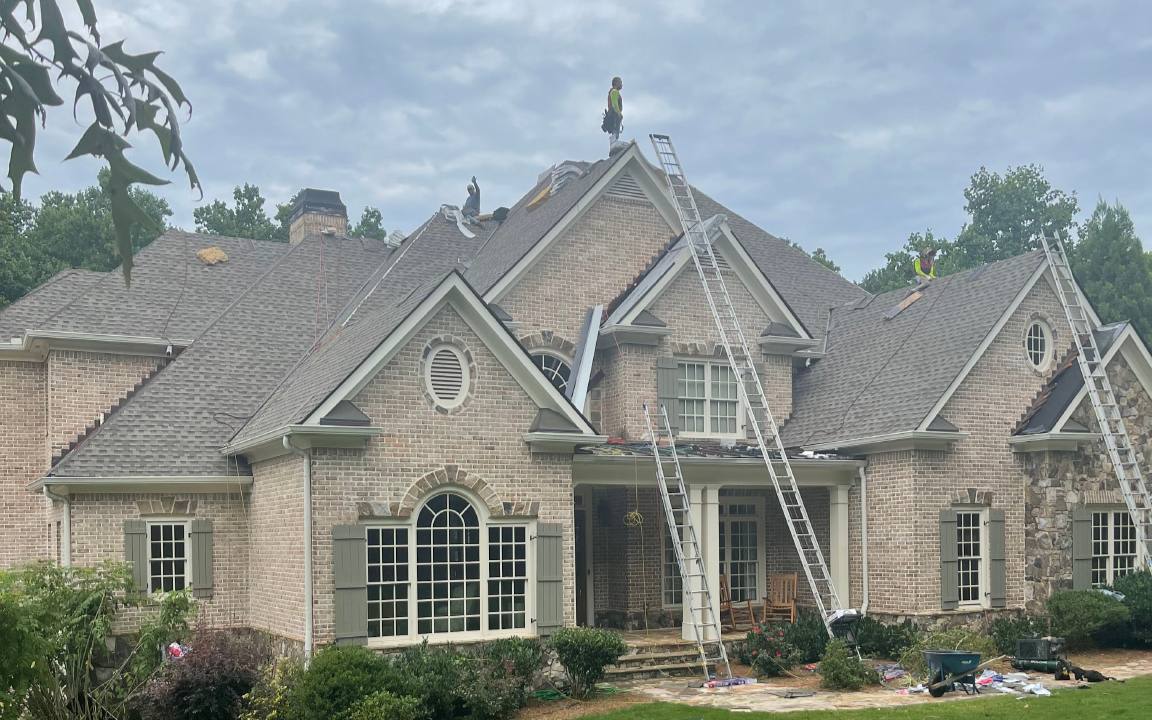
- Architectural shingles are the best value for most Atlanta homes. They look good on almost any style, they're fast to install, and a well-built shingle system lasts 20 to 25 years here.
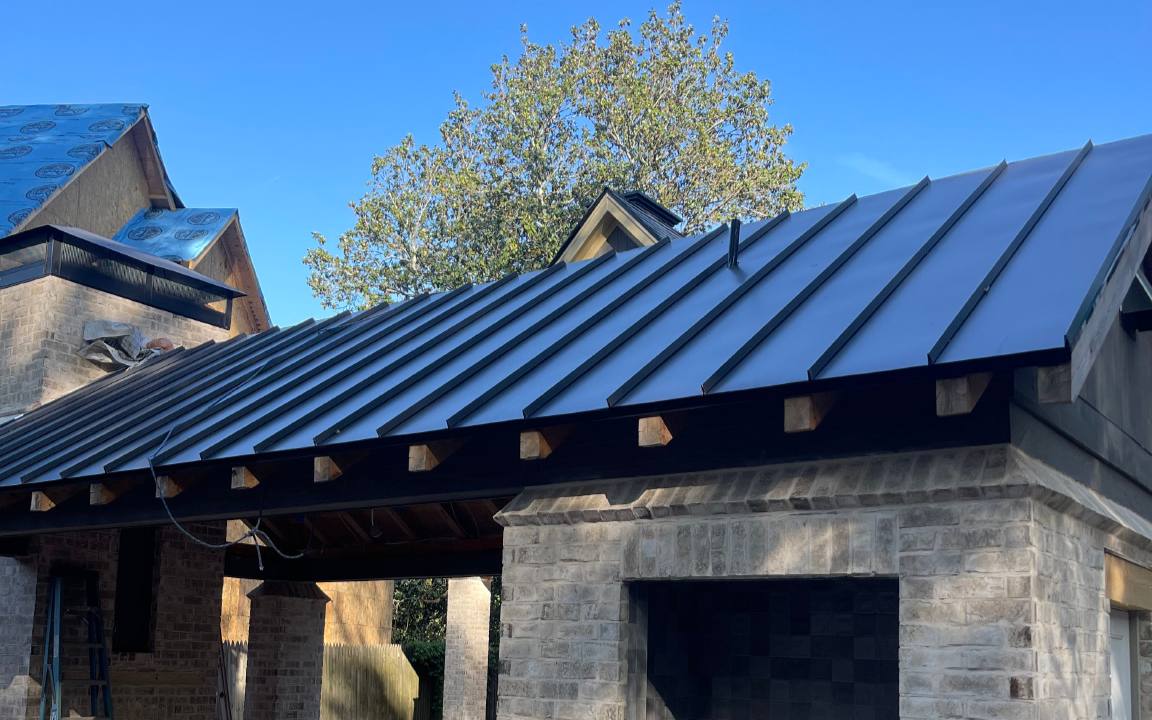
- Standing seam metal costs more up front but commonly lasts 40 to 70 years, sheds pine needles and debris, and handles heat well. If you plan to stay in the house a long time, the lifetime math often favors metal.
How long each one lasts in Atlanta.
Atlanta is hard on roofs. Summer attic temperatures can climb well past 130°F, our humidity feeds algae and moss, and the spring and summer storm season brings hail and straight-line wind almost every year.
- 3-tab shingles: around 15 to 20 years. Most new roofs today are architectural instead.
- Architectural shingles: around 20 to 25 years with good ventilation. Poor attic ventilation can take years off that.
- Designer shingles: thicker and heavier than standard architectural shingles, with longer manufacturer warranties. See designer shingles.
- Standing seam metal: commonly 40 to 70 years, depending on the panel, gauge, finish and installation.
Over 40 years, a shingle roof will usually be replaced at least once, sometimes twice. A well-installed standing seam roof will usually still be on the house.
Heat and energy.
Dark asphalt shingles absorb a lot of heat. Metal with a light or reflective finish reflects more of the sun, which can lower roof surface temperatures and reduce how hard the attic has to work in July and August.
The bigger factor for either roof is ventilation. Balanced intake at the eaves and exhaust at the ridge keeps attic heat from baking shingles from below and keeps moisture from building up in winter. We check and correct ventilation on every replacement, whatever material goes on. More on that in our attic ventilation guide.
Hail and wind.
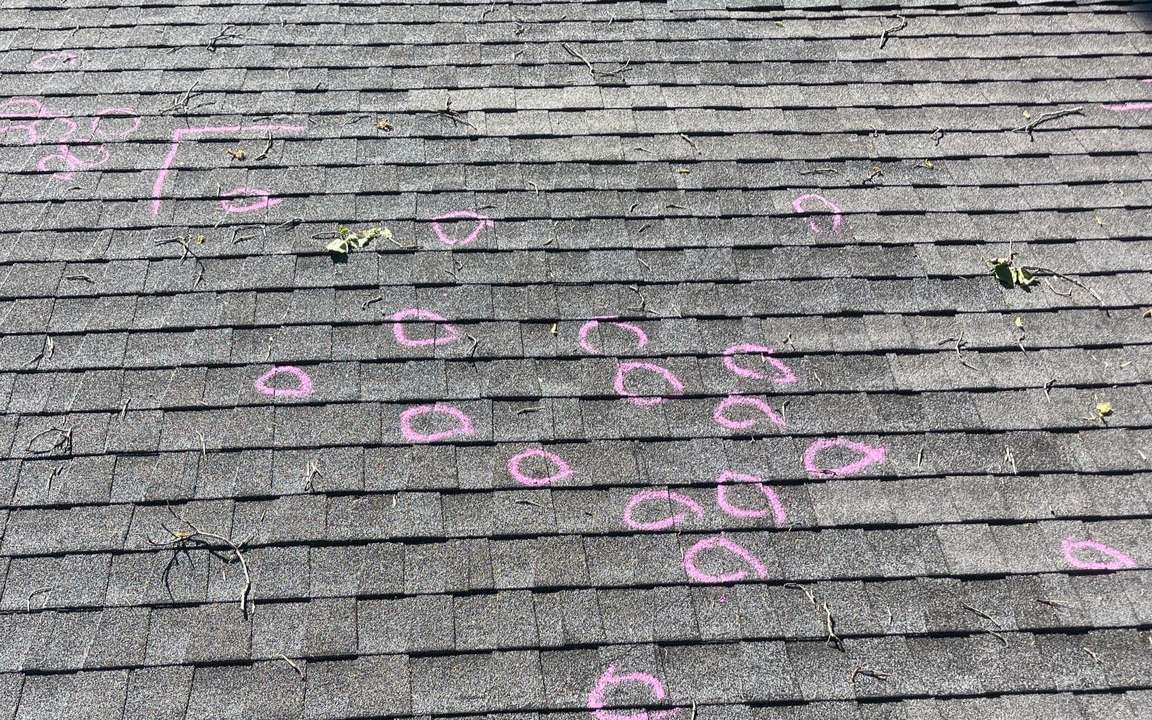
- Shingles: hail around 1 inch and larger can bruise shingles, knock off granules and crack the mat. That damage shortens the roof's life even if it doesn't leak right away. Impact-resistant (Class 4) shingles hold up better, and some insurers offer discounts for them. Ask your agent.
- Metal: standing seam sheds hail well and rarely leaks after a storm. Very large hail can leave cosmetic dents in the panels, so ask about panel gauge and impact ratings. Thicker 24-gauge steel resists dents better than thinner panels.
- Wind: both systems hold up well when installed to the manufacturer's spec. Concealed-fastener standing seam has no exposed screws to back out, and quality shingles carry high wind ratings when they're nailed correctly.
Hail is a real factor here. Metro Atlanta logged more than 25 hail days in 2026 alone. See our 2026 Atlanta hail storm log.
Trees, pine straw and moss.
Metro Atlanta's tree canopy is beautiful, and it's rough on roofs. Leaves and pine needles collect in valleys and behind chimneys, hold moisture against the roof, and feed the black streaks you see on north-facing slopes.
Metal's smooth surface sheds debris more easily and doesn't grow algae the way asphalt can. If your house sits under big oaks and pines, that's a real point in metal's favor. Either way, keeping valleys and gutters clear adds years to the roof.
Noise.
This is the most common worry about metal, and it's mostly a myth. Over a solid wood deck with underlayment and an insulated attic, a standing seam roof is no louder in the rain than shingles from inside the house. The loud metal roofs people remember are usually panels screwed straight onto open framing on a barn or porch.
Looks and home style.
- Shingles suit nearly every home style, and designer shingles can give you the look of slate or cedar shake.
- Standing seam suits modern, farmhouse, lake house and mountain styles, and works beautifully as an accent: a metal porch or bay window over a shingle main roof is one of the most popular combinations we build.
- On historic and luxury homes, standing seam often pairs with copper or slate details.
Resale and insurance.
A new roof of either type removes one of the biggest objections buyers raise. Metal can be a selling point for buyers who want a roof they'll never have to replace. Our shingle replacements carry a 10 to 15-year transferable Mosaic workmanship warranty that goes with the house.
Some insurers price policies differently for metal or impact-resistant roofs. Call your agent before you decide. It can change the math.
What actually drives the cost.
We don't publish one price for either roof because the number depends on your house. The things that move it:
- Size and pitch. Steeper roofs take more safety setup and labor.
- Complexity. Valleys, dormers, chimneys and skylights all add flashing work.
- Material choice. Panel gauge and finish for metal; architectural, designer or impact-resistant for shingles.
- Tear-off and decking. Number of layers coming off and the condition of the wood underneath. On our replacements, rotted decking is replaced at no additional charge.
On a free inspection we can price both options side by side so you see the real difference for your home.
So which should you choose?
Choose architectural shingles if:
- You plan to sell in the next 10 years.
- You want the best value today.
- Your home's style or HOA favors shingles.
Choose standing seam metal if:
- You plan to stay 15 years or more.
- You have heavy tree cover and want a roof that sheds debris.
- You like the look, or you're adding a porch or bay accent.
- You never want to re-roof this house again.
Still on the fence? Many homeowners split the difference: shingles on the main roof, metal on the porches and bays. Learn more about standing seam metal roofing and roof replacement, or compare every material in our roofing materials guide.
Is a metal roof worth it in Georgia?
For homeowners planning to stay long-term, often yes. Metal lasts two to three times as long as asphalt shingles, handles heat and storms well, and needs little maintenance. The upfront cost is higher, so compare both options for your house.
Does a metal roof make a house hotter?
No. A light or reflective metal finish can reduce heat gain compared with dark shingles. Attic ventilation underneath matters more than the roofing material.
Will hail dent a metal roof?
Large hail can leave cosmetic dents, especially on thinner panels. Standing seam rarely leaks after hail, and thicker panels resist denting better. Ask about gauge and impact ratings.
Can you put metal over my existing shingles?
Sometimes, but we usually recommend a full tear-off so we can inspect the decking, replace anything rotten and install the right high-temperature underlayment.
How long do shingles last in Atlanta?
Architectural shingles typically last 20 to 25 years here with good ventilation. 3-tab shingles run closer to 15 to 20 years.