If you asked us to name the single biggest reason shingle roofs fail early in metro Atlanta, it wouldn't be hail. It would be attic ventilation. A roof that can't breathe ages from the inside out, and no shingle warranty covers that.
What attic ventilation does.
A vented attic works like a chimney. Cooler outside air comes in low, at the eaves, and hot, moist air leaves high, at the ridge. That steady flow does two jobs:
- In summer, it carries heat out of the attic so it doesn't bake the shingles from below or radiate into the rooms under it.
- In winter, it carries moisture out so it doesn't condense on the cold underside of the roof deck.
Why it matters more in Georgia.
On a July afternoon, a poorly vented attic in Atlanta can get far hotter than the air outside. That heat:
- Dries the oils out of asphalt shingles, so they turn brittle, curl and shed granules years early.
- Makes your AC work harder to cool the rooms below.
- Can void or limit shingle warranties. Manufacturers require proper ventilation.
Then there's humidity. Warm, moist air from showers, cooking and laundry rises into the attic. When it hits the cold deck on a winter night, it condenses. Over time that means mold, rusted nails, delaminating plywood and soft decking.
The two halves: intake and exhaust.
Intake brings air in at the bottom of the roof, usually through vented soffits under the eaves.
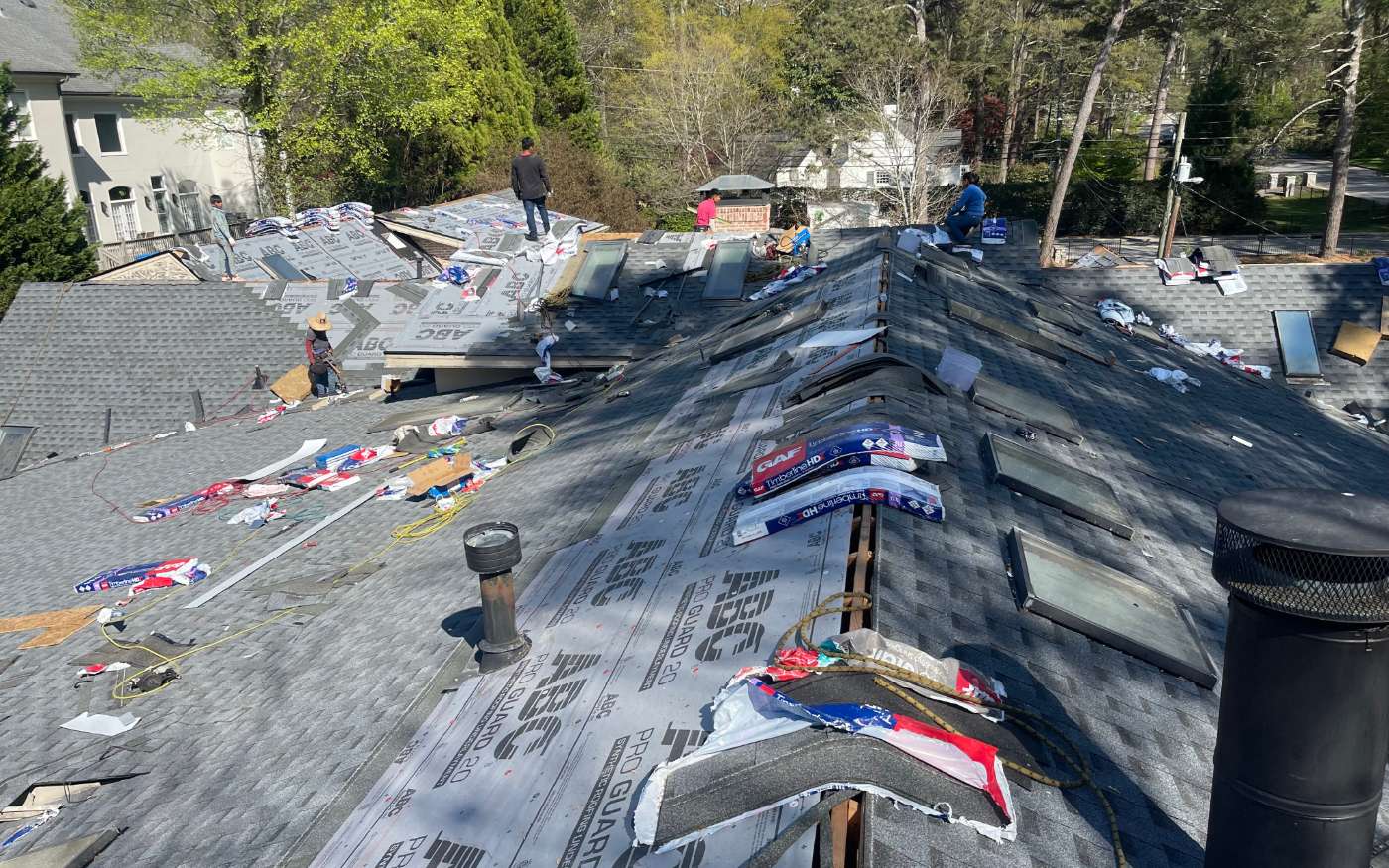
Exhaust lets air out at the top, most often through a ridge vent running along the peak. Box vents, turbines and powered fans are other exhaust options.
The key is balance. A good rule of thumb is roughly equal intake and exhaust. Too much exhaust and too little intake is common, and it can actually pull conditioned air out of the house or pull rain in through the exhaust vents.
Common ventilation problems we find.
- Soffit vents blocked by insulation blown in during an energy upgrade.
- No intake at all on older homes, or painted-over soffit vents.
- Mixed exhaust types, like a ridge vent plus box vents plus a power fan, that short-circuit each other.
- Bathroom fans venting into the attic instead of outside.
- Crushed or clogged ridge vents.
- Pests nesting in the ridge, which blocks airflow and lets animals into the attic.
Signs your attic isn't breathing.
- The attic is stifling in summer, even early in the day.
- Frost or damp spots on the underside of the deck in winter.
- Dark staining or mold on rafters and decking.
- Rusty nail tips poking through the deck.
- Shingles aging faster on some slopes than others, or curling early.
- Upstairs rooms that are hard to cool.
Where Attic Armor fits.
The open slot under a ridge vent is exactly what squirrels, bats, birds and wasps look for. Once they're in, nests block airflow and damage insulation.
Attic Armor is a pest barrier installed under the ridge vent that keeps animals out while air still flows through it, so your ventilation keeps working. It isn't sold in supply stores. Mosaic is Attic Armor's preferred roofing contractor in Georgia, and it's part of our standard shingle replacement. Read more in What Is Attic Armor?
How we handle ventilation on a new roof.
On every replacement we:
- Measure the attic and calculate the intake and exhaust it needs.
- Clear or add soffit intake where possible.
- Install a continuous ridge vent with Attic Armor beneath it.
- Remove conflicting exhaust vents so the system works as one.
- Make sure bath fans vent outside, not into the attic.
That's a big part of why a Mosaic roof lasts. See how we do a roof replacement and how long roofs last in Atlanta.
Can an attic have too much ventilation?
It can have the wrong kind. Too much exhaust without enough intake can pull conditioned air from the house or draw rain in through vents. Balance matters more than the amount.
Do I need an attic fan?
Usually not. A balanced passive system of soffit intake and a ridge vent works well for most homes. Powered fans can interfere with ridge vents if they aren't planned together.
Will better ventilation lower my power bill?
It can help by reducing attic heat, especially in upstairs rooms. Insulation and air sealing matter too.
Does Attic Armor block ventilation?
No. It's designed to let air flow through the ridge while keeping pests out.