Metro Atlanta has had more than 25 hail days in 2026 alone (see every date here). The tricky part is that most hail damage is invisible from the ground. A roof can look fine from the driveway and still have dozens of bruised shingles that will start leaking a year or two from now.
These are the seven signs we check on every roof after a storm.
1. Dents on soft metal.
Start with what you can see without a ladder. Look at your gutters, downspouts, window wraps, the AC unit's fins and the mailbox. If those have fresh dents or dings, the roof took the same hits. Up top, we check box vents, pipe boots, ridge vents and flashing, because soft metal shows hail size better than anything else.
2. Bruised shingles.
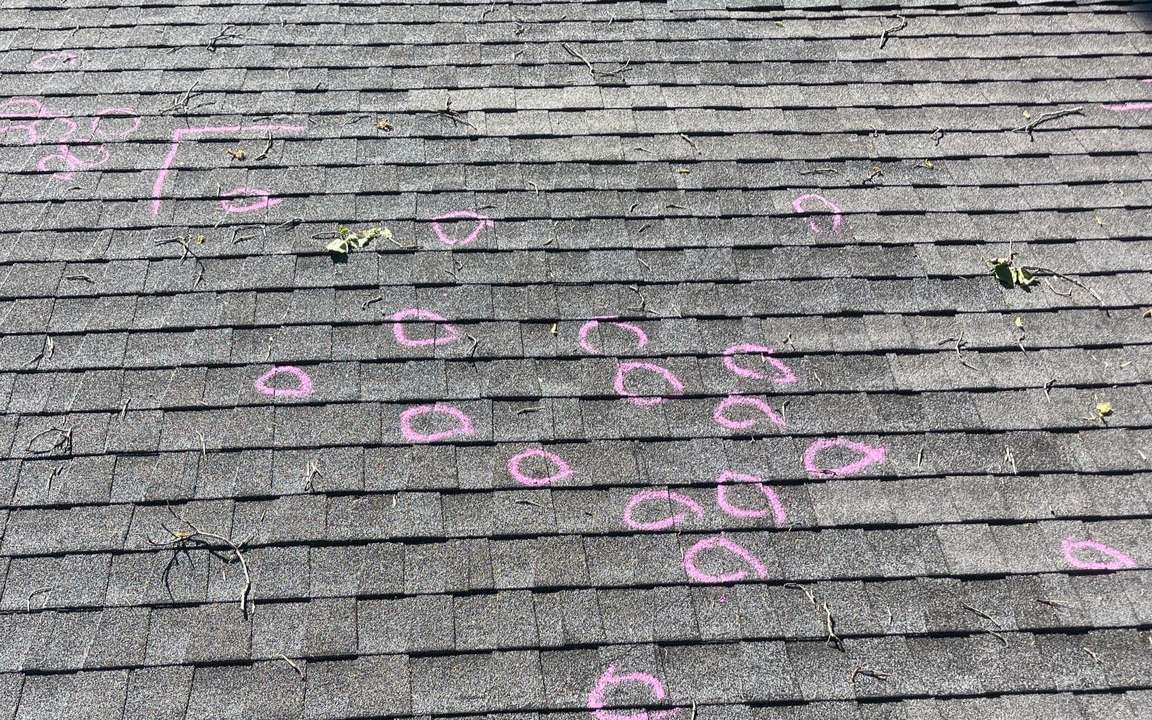
A hail bruise is a soft spot where the impact crushed the mat under the granules. It often looks like a dark circle, and it feels spongy when you press it, like a bruise on an apple. Bruises are the damage adjusters care about most, because they weaken the shingle and shorten its life.
3. Granule loss in spots.
Hail knocks granules loose and exposes the black asphalt underneath. Even wear across the whole roof is normal aging. Random, round bare spots are not. You may also find a pile of granules at the bottom of your downspouts after a storm.
4. Cracked or broken shingles.
Larger hail, and hail driven by high wind, can crack shingles outright or break off corners. Older and brittle shingles crack more easily, which is why roofs past the 12 to 15 year mark often take more damage from the same storm.
5. Split or torn shingle edges.
Wind-driven hail hits shingles at an angle and can split the exposed edge or tear the seal strip. These spots let wind get under the shingle later, which is how a small storm turns into missing shingles months down the road.
6. Damaged flashing, vents and skylights.
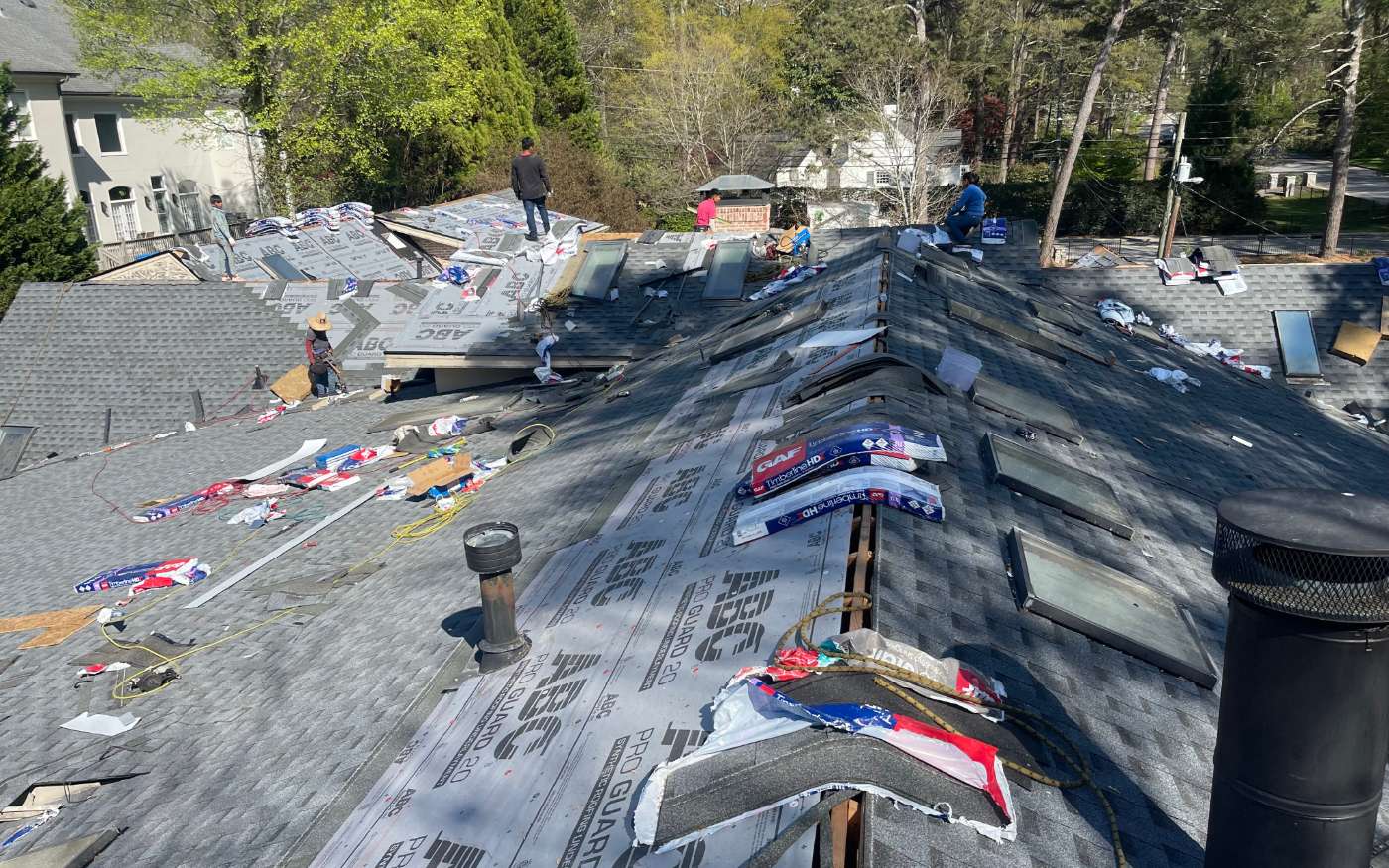
Hail dents and cracks the parts of the roof that seal around openings: pipe boots, vent caps, chimney flashing, and skylight domes or frames. A cracked pipe boot is one of the most common leaks we find after hail.
7. New leaks or ceiling stains.
If a ceiling stain shows up after a storm, don't wait. Water that reaches the inside has already gotten past the shingles and underlayment, and it gets worse with every rain. Photograph the stain, protect what's under it, and call for an inspection.
What to do if you think your roof was hit.
- Write down the storm date. Check our 2026 hail storm dates to match your date with a storm.
- Take photos from the ground. Get the dented gutters, downspouts, AC unit and any interior stains.
- Stay off the roof. Wet shingles are slick, and walking a hail-damaged roof can add damage.
- Get a free inspection before you call your insurance company. Most Georgia policies give you 12 months from the storm to file, but an open claim on a roof with no real damage still goes on your record. Knowing first protects you.
- If there's damage, file promptly. We document every hit with photos and can meet your adjuster on the roof. Here's how the claim process works in Georgia.
Why it matters even if nothing is leaking.
Hail damage rarely leaks right away. Bruised shingles lose granules faster, crack in the summer heat, and fail years early. By the time it leaks, the storm may be past your claim deadline, and the repair comes out of your pocket instead of your policy.
Can you see hail damage from the ground?
Usually not. Dented gutters, downspouts and AC fins are good clues you can see from the ground, but bruised shingles and granule loss only show up when someone walks the roof slope by slope.
What size hail damages a roof?
Hail around 1 inch (quarter size) and up can damage asphalt shingles, especially older ones. Smaller hail driven by strong wind can also cause damage. Roof age, shingle type and the angle of the storm all matter.
How long do I have to file a hail claim in Georgia?
Most Georgia homeowner policies allow 12 months from the date of the storm, and some allow longer. Check the claim-reporting section of your policy to be sure.
Does a hail inspection cost anything?
No. Our roof inspections are free. If your roof is fine, we'll tell you, and you'll have photos showing it.