When a commercial roof starts leaking, owners usually assume they need a new roof. Sometimes they do. But many aging flat and metal roofs are still structurally sound and mostly dry, and for those, a roof coating restoration can stop the leaks and add years of life for a fraction of the cost of a tear-off, with no debris and no need to close the building.
What a roof coating is.
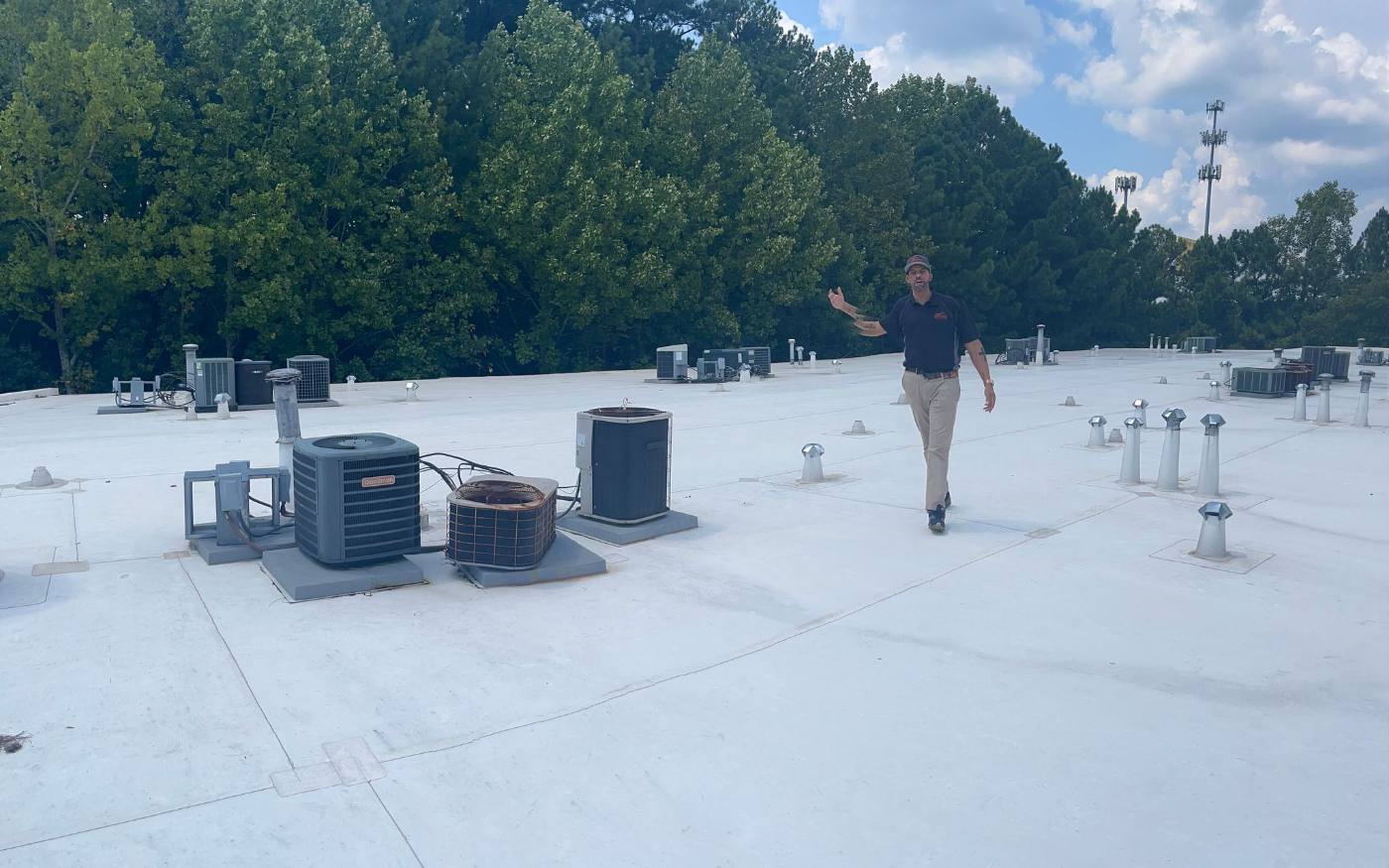
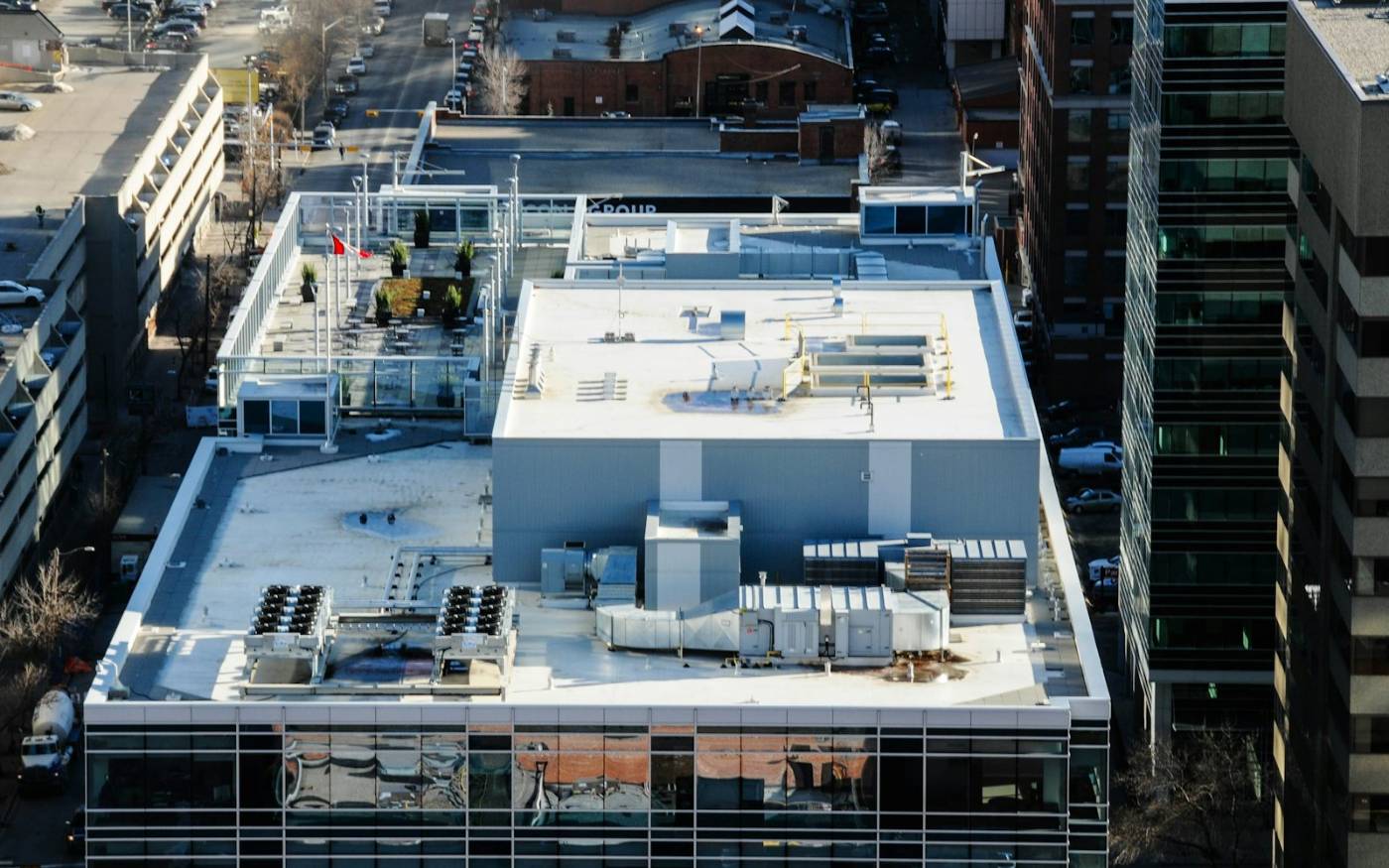
A restoration coating is a fluid-applied membrane built up in layers over the existing roof. Seams, fasteners, penetrations and flashings are reinforced first, then the whole roof is covered in a continuous, seamless, reflective surface.
Common systems:
- Silicone: the top choice for Georgia flat roofs. It handles ponding water better than most coatings and holds up to UV.
- Acrylic: highly reflective and cost-effective on sloped metal and well-drained roofs, but not for areas that hold water.
- Manufacturer systems like ASTEC, which pair specific primers, base coats and finish coats and can carry a manufacturer warranty on qualifying roofs.
When a coating makes sense.
- The roof deck is solid.
- Most of the insulation is dry. This is the deciding factor.
- Leaks come from seams, fasteners, flashings and penetrations, not from a roof that's failing everywhere.
- The roof is TPO, EPDM, PVC, modified bitumen or metal with life left in the substrate.
- You want to avoid tear-off, landfill debris and disruption to tenants.
When it doesn't.
- Large areas of wet or saturated insulation.
- A deteriorated or rotted deck.
- Severe, widespread ponding that the coating can't fix on its own.
- A roof that's already been coated and has failed adhesion.
Putting a coating over a wet roof seals the problem in. That's why we check before we recommend.
How we decide: moisture first.
Before proposing a coating, we survey the roof and take core cuts to see what's under the membrane. Wet areas are cut out and replaced. If too much of the roof is saturated, a coating is the wrong answer, and we'll show you the cores and photos and price a replacement, such as TPO or Duro-Last PVC, instead. See TPO vs. PVC.
The restoration process.
- Moisture survey and core cuts.
- Remove and replace wet insulation and damaged membrane.
- Power-wash and clean so the system bonds.
- Reinforce seams, fasteners, penetrations and flashings with fabric and mastic.
- Prime where the substrate needs it, then apply base and finish coats to the specified thickness.
- Final inspection, thickness checks and photos.
Most projects take a few days to two weeks, scheduled around dry weather.
Metal roofs.
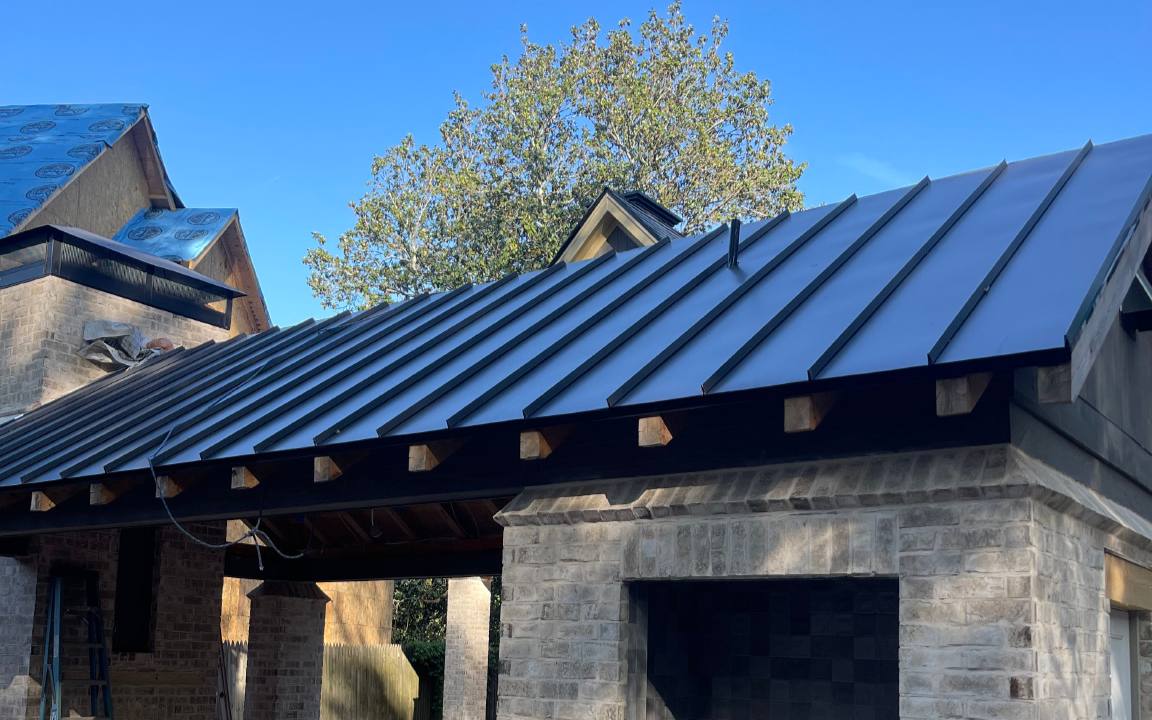
Older screw-down metal roofs on warehouses, shops and churches usually leak at the fasteners, laps and trim long before the panels wear out. A restoration treats the rust, seals or replaces every fastener, reinforces the laps, then coats the whole roof. Panels that are rusted through get replaced first.
Warranties.
Coating warranties depend on the system and the thickness applied. ASTEC's Renewable warranty is designed so that, at the end of the term, the roof can be inspected and re-coated to renew coverage instead of being torn off. Mosaic is an ASTEC Authorized Contractor, so we install ASTEC systems to spec and can register qualifying projects. Warranty terms for your building are written into the proposal.
Coating vs. replacement at a glance.
- Cost: a coating is typically a fraction of tear-off and replacement.
- Disruption: minimal for a coating; more for a tear-off.
- Debris: almost none for a coating.
- Requirement: a coating needs a dry, sound roof. A replacement doesn't.
- Future: a coated roof can often be re-coated again. A replacement starts the clock over.
Learn more about roof coatings, ASTEC roof coatings and commercial roofing.
How long does a roof coating last?
It depends on the system and thickness. Coatings commonly last 10 to 20 years and can often be re-coated to extend the roof's life again.
Can you coat a roof that's leaking?
Yes, if the leaks come from seams, fasteners and penetrations and the insulation is mostly dry. We repair problem areas first, then coat.
Will a coating fix ponding water?
Silicone tolerates ponding better than most coatings, but it doesn't change where water drains. Severe ponding may need drains, crickets or tapered insulation as part of the project.
Can you coat a house roof?
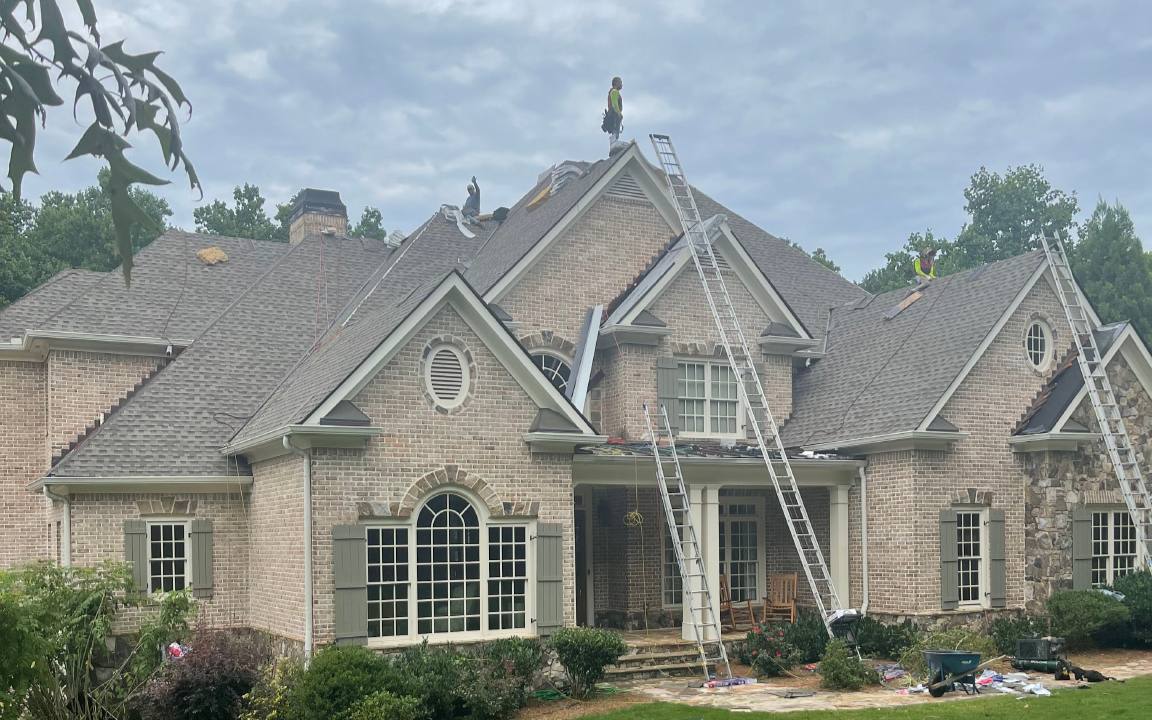
Coatings are for low-slope and metal roofs, including residential metal roofs and low-slope porches and additions. Steep-slope shingle roofs aren't coating candidates.