Most of Virginia-Highland was built between about 1910 and 1930, and it shows on the roof. Low-pitched Craftsman gables with deep eaves and exposed rafter tails, brick chimneys that have settled for a century, and a rear addition on almost every other house — each one a place where an old roof meets a newer one.
Lots are narrow and driveways are shared or nonexistent, so how a crew stages a tear-off matters as much as how they install. We plan dumpster placement, protect landscaping and neighbors' cars, and keep the street clean at the end of every day.
What we see on Virginia-Highland roofs.
- Addition tie-ins. Where a 1990s or 2000s addition meets the original roof is the most common leak point we find. The fix is usually re-flashing the transition and correcting the slope detail, not a full roof.
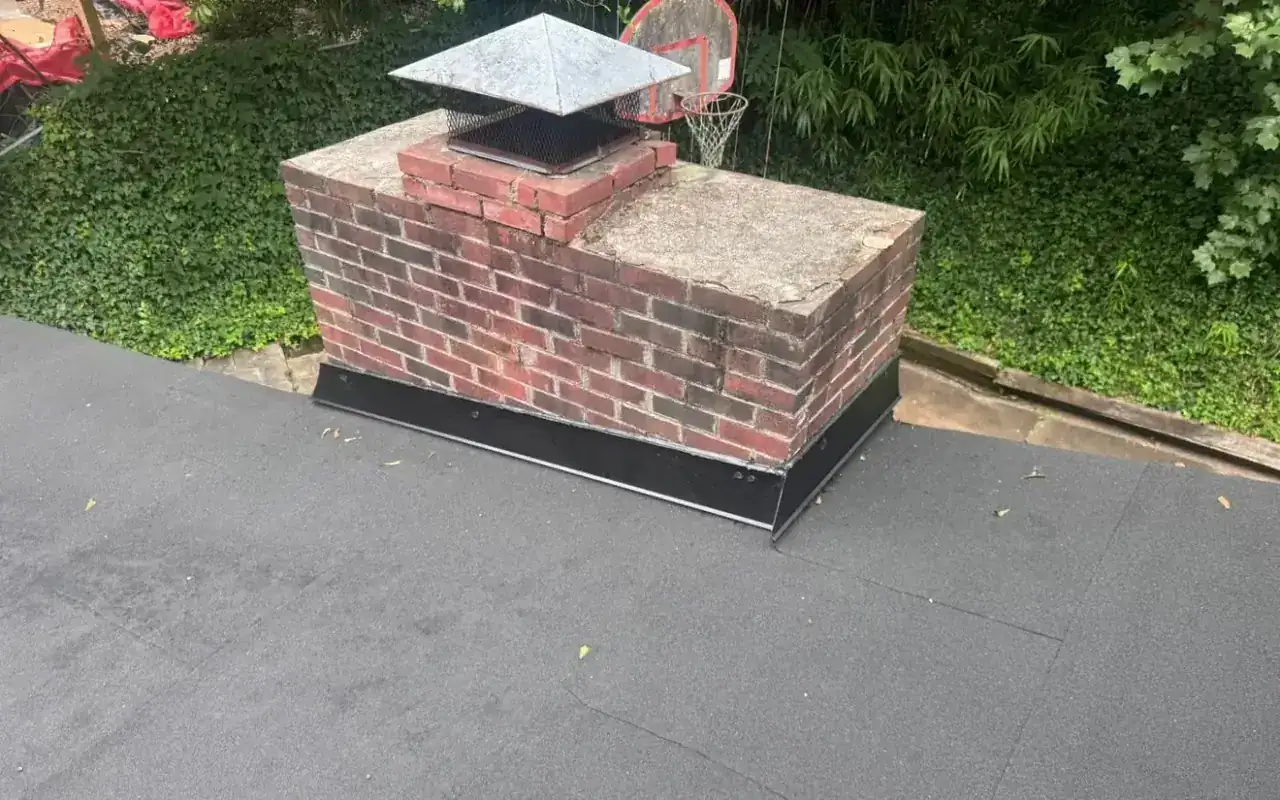
- Chimney flashing. Original brick chimneys often have step flashing that was face-nailed or tarred over years ago. We rebuild it with new step and counter flashing cut into the mortar joint.
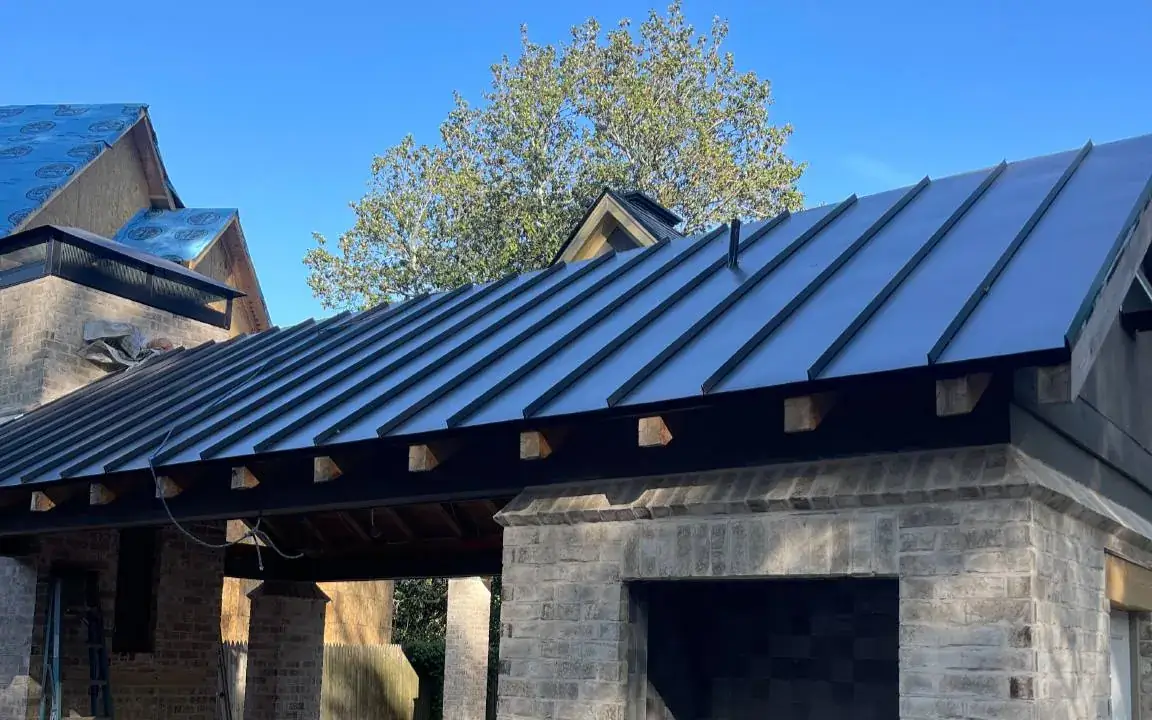
- Low-slope porch roofs. Front porches and back sunrooms are frequently too flat for shingles. We replace them with a proper low-slope membrane or standing seam instead of shingling over the problem.
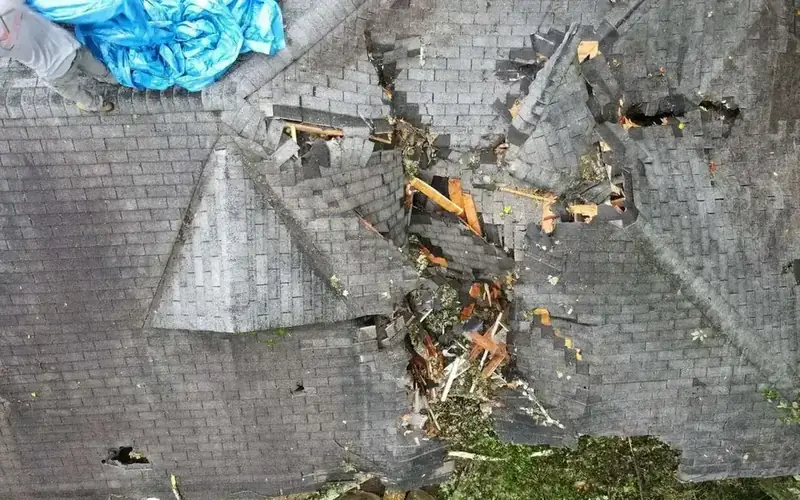
- Branch damage. Mature oaks overhang most roofs here. After a summer storm, even a small limb can crack shingles or punch through 1x decking.
Before you re-roof in Virginia-Highland.
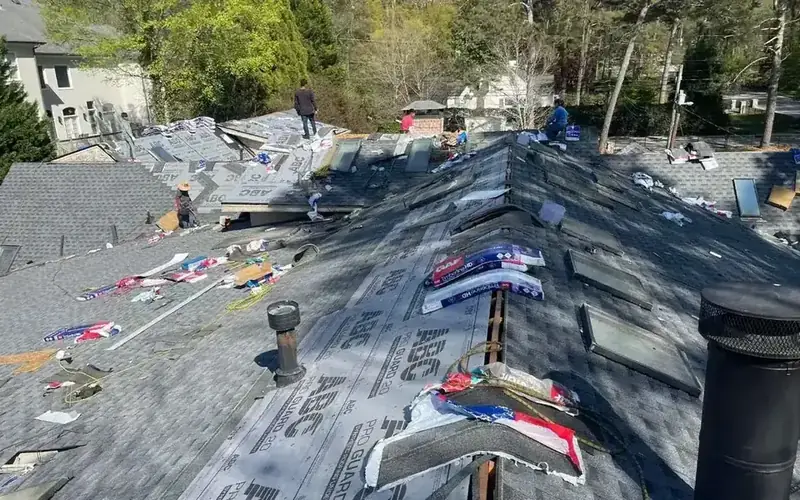
Many Virginia-Highland houses still have original 1x board decking under the shingles. We inspect it plank by plank at tear-off and replace only what's soft. If you're on a street with historic overlay rules, we confirm material and color requirements before ordering anything.
Storm and tree damage on Virginia-Highland streets
Summer thunderstorms bring down limbs from the big oaks and maples that line the older streets, and a single limb can crack shingles across a whole slope. After a storm we check from the ground, then go up to look at ridges, gutters and the flashing around vents. We also check the attic for daylight through the decking and for water stains on the rafters, since those show up hours before a ceiling stain does.
If you file a claim, we photograph each slope with a time stamp and mark the hits, so the adjuster sees the same damage we do. Keep the limb and the broken shingles until the adjuster has been out.
Working on narrow streets and shared driveways
Many Virginia-Highland lots have no driveway and little room on the street. We decide where the dumpster goes before the job starts, put down plywood for foot traffic, and load debris out the front or side yard. Ladders and materials stay off the sidewalk, and the street is swept every evening. If a neighbor's car has to move for a delivery, we tell you a day ahead so you can pass the word.
Frequently asked questions
Do I need approval to replace my roof in Virginia-Highland?
The neighborhood is listed on the National Register, which by itself doesn't restrict private owners. Some streets fall under City of Atlanta overlay or district rules that do. We check your address before quoting and handle any permit paperwork.
Can you replace just my porch roof?
Yes. Low-slope porch and addition roofs are one of the most common jobs we do here, and they can usually be replaced without touching the main roof.
My bungalow has board decking. Is that a problem?
Not necessarily. Solid 1x boards hold nails well. We replace soft or split boards, and sheath over the boards only when gaps are too wide for the shingle manufacturer's warranty.
Will a limb that fell on my roof be covered?
Usually, if the policy covers windstorm damage and the limb was not the result of poor maintenance on the tree. Your insurer decides coverage. We document the damage and tell you what we found in writing.