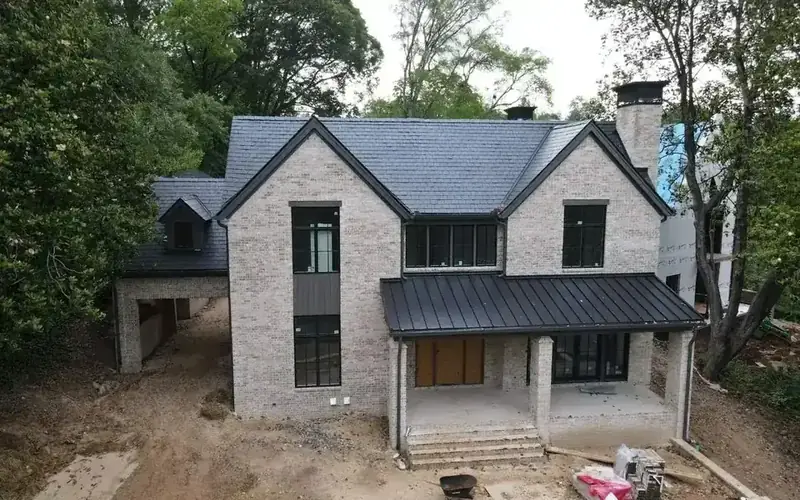
Morningside's housing is mostly brick, built from the 1920s through the 1950s, with a lot of English Tudor and cottage styling: steep, asymmetrical gables, eyebrow details, arched entries and tall chimneys. Many have been carefully expanded, and a growing number of lots now hold new construction.
The neighborhood is heavily wooded and hilly, which brings two things to every roof here: storm debris, and moisture. Shaded north slopes stay damp, grow moss and wear faster than the sunny side of the same house.
What we see on Morningside roofs.
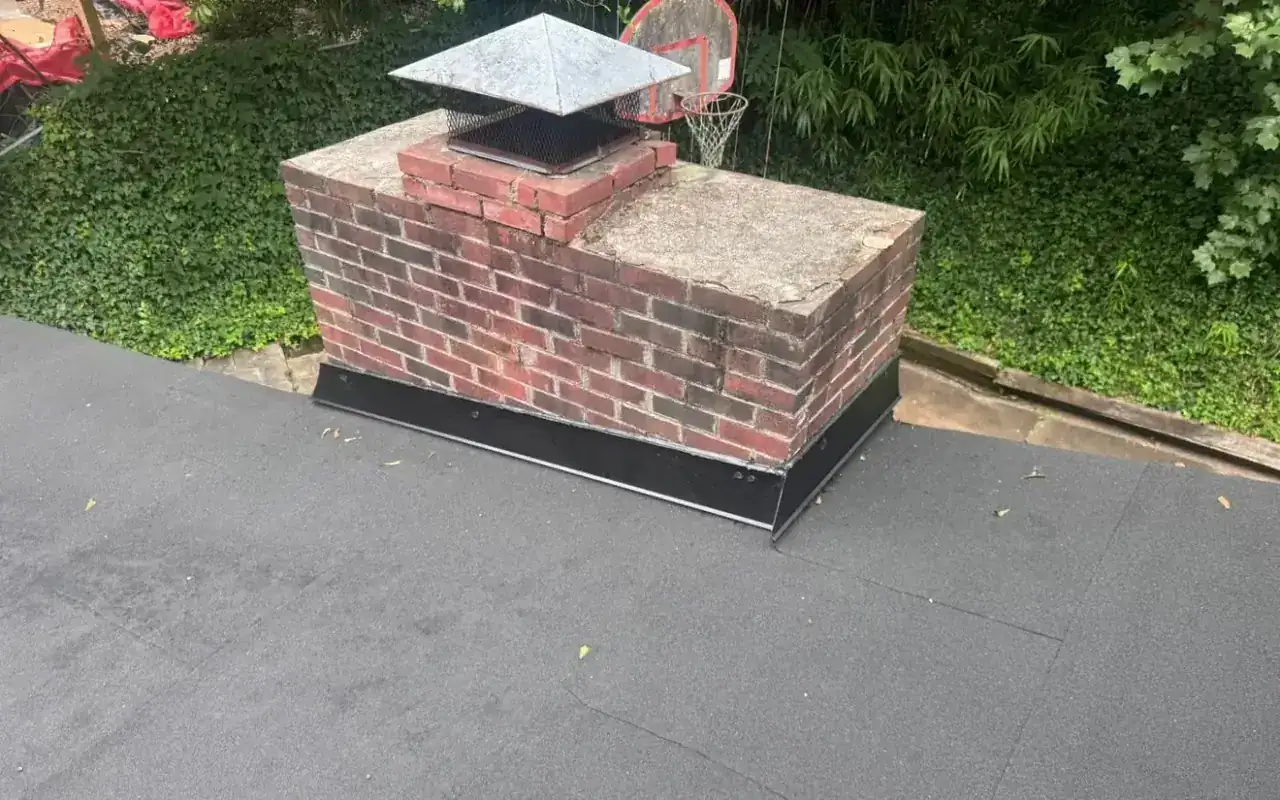
- Chimney and wall flashing. Tall brick chimneys and brick-to-roof walls are the most common leak points on Tudors. Counter flashing needs to be cut into the brick, not caulked to the face.
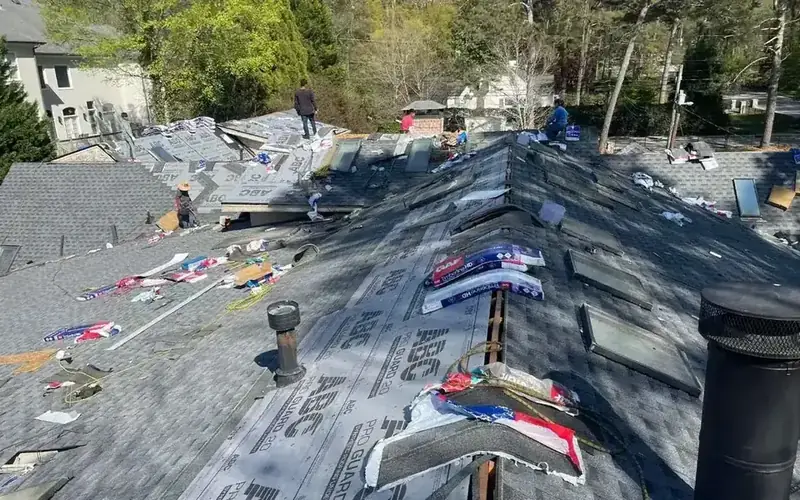
- Steep-slope wear. Tudor pitches are steep enough that crews need full safety setups. It's also why bargain bids sometimes skip proper staging — and cut corners.
- Moss and shade. North-facing and heavily shaded slopes hold moisture. We use algae-resistant shingles and make sure attic ventilation is balanced.
- Slate and copper details. Some homes have slate roofs or copper bay roofs that are worth repairing rather than replacing.
Before you re-roof in Morningside.
On a Tudor, the flashing and the ventilation matter more than the shingle brand. Ask for the flashing plan in writing, and make sure the quote includes new step and counter flashing, not reused metal.
Balancing attic air on shaded Morningside homes
Heavy shade keeps Morningside roofs damp for much of the year, so the attic is where most problems start. A proper balance of soffit intake and ridge or roof exhaust moves moisture out before it condenses on the decking. We check the vents in the attic during every tear-off, not only on the outside.
Drainage on hillside lots
Many Morningside lots slope toward the house, and a roof that drains well still sends water to the foundation if the gutters are full of leaves. We recommend gutter repair or replacement when the existing system is overflowing, and we point out downspouts that dump right at the foundation so you can decide how to route them.
Frequently asked questions
Why are Tudor roofs more expensive to replace?
Steep pitches require more safety equipment and slower work, and Tudors usually have more chimney and wall flashing. Those are real costs, not upsells.
Can you match my existing slate?
In most cases, yes. We source salvaged or new slate to match color and size for repairs.
Moss is growing on my roof. Do I need a new one?
Not necessarily. Light moss can be treated. If it has lifted shingles or the granules are gone, that slope may need replacement. We'll show you photos either way.
Do I need gutter guards with all these trees?
They help in heavy canopy, but guards need occasional cleaning too. We recommend them only where the trees make regular cleaning impractical.