Metal roofing options
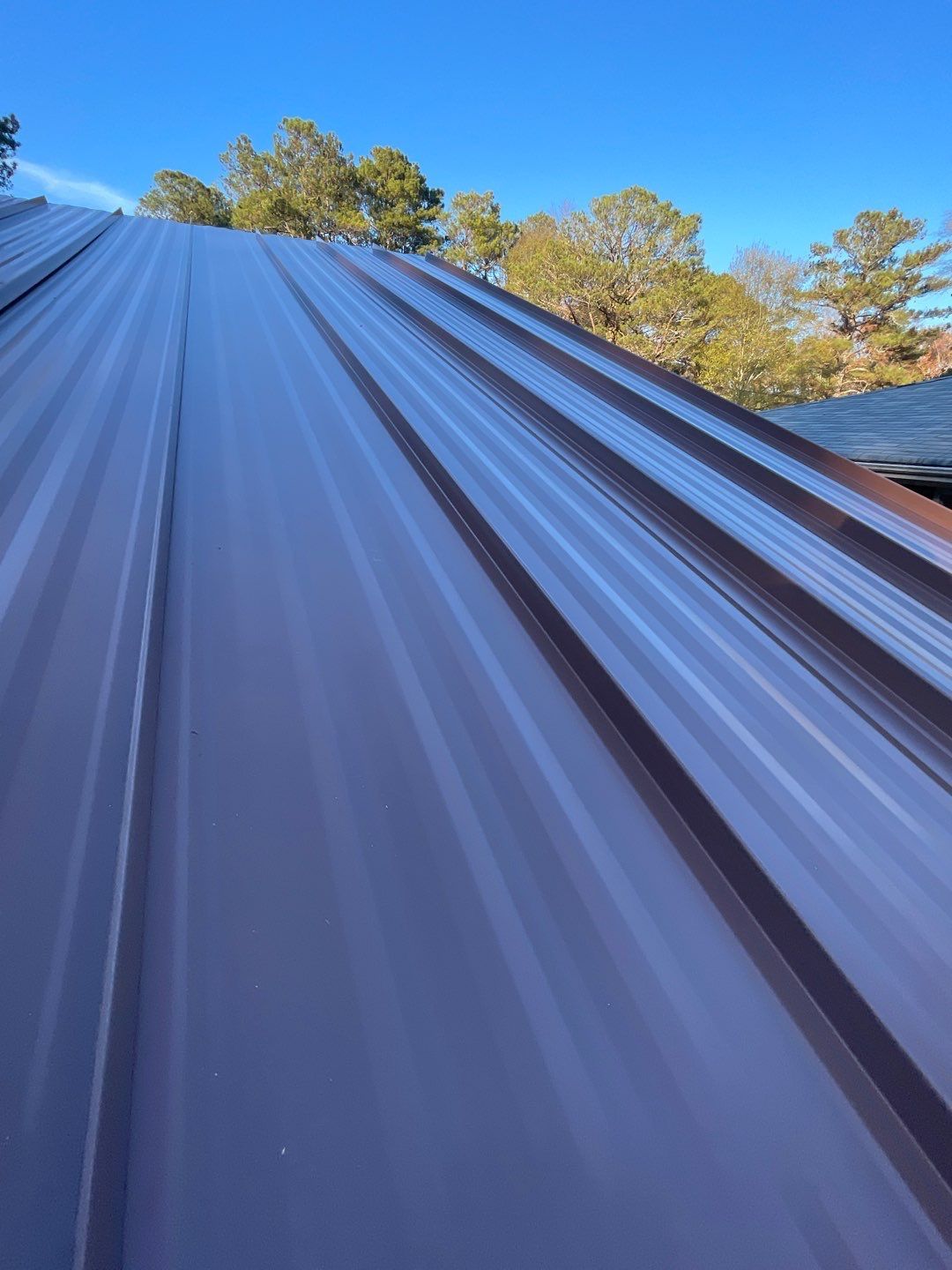
- Standing seam — concealed fasteners, the premium choice for homes.
- Metal accents — porches, bay windows and dormers over a shingle main roof.
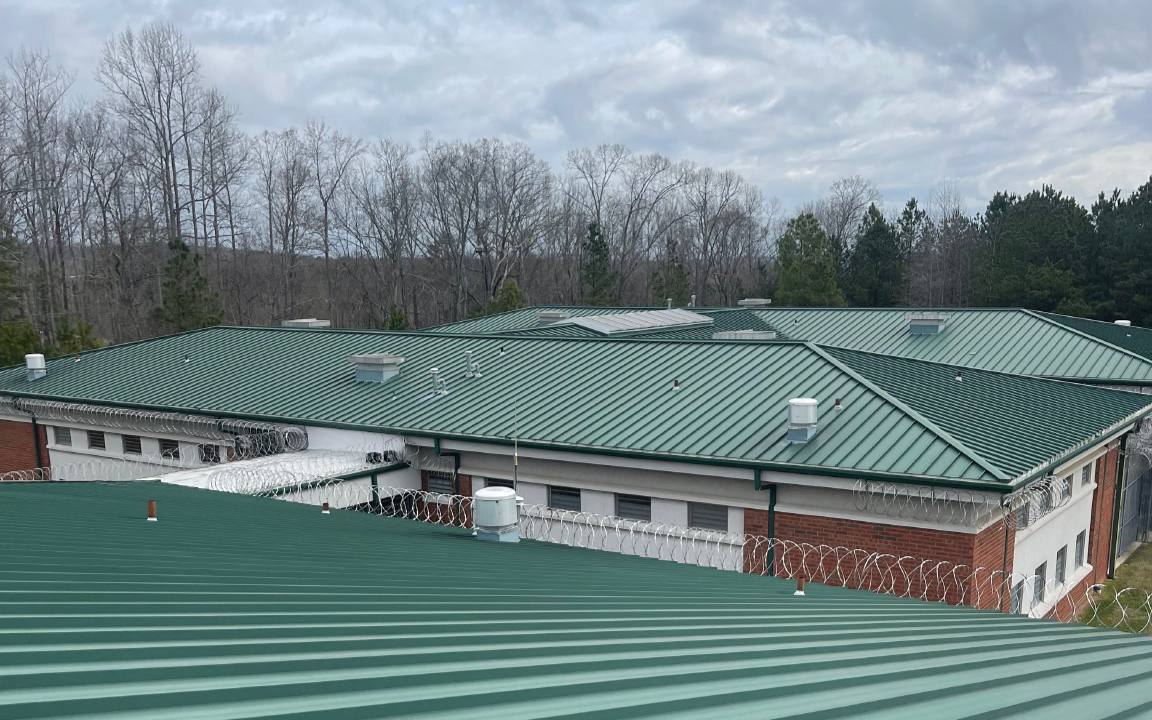
- Commercial metal — re-roofs and repairs on offices, medical and light industrial buildings.
Metal roof repair
Most metal roof leaks come from backed-out fasteners, failed sealant at transitions, or flashings that weren't designed to move. We repair the detail, not just smear sealant over it.
Standing seam vs. exposed-fastener metal
- Standing seam - concealed fasteners and raised seams that let the panels expand and contract with temperature. The premium choice for homes, with a 40+ year service life. See standing seam metal roofing.
- Exposed-fastener (screw-down) panels - lower cost and common on barns, shops and some commercial buildings. The screws and their rubber washers need maintenance every 10 to 15 years.
- Copper and specialty metals - for historic homes, bays and accents. See copper roofing.
What to know before you buy metal
- Gauge. 24-gauge steel is thicker and more dent-resistant than 26 or 29. We spec the gauge for the job, not the cheapest panel.
- Finish. Premium PVDF (Kynar-type) paint finishes hold their color and resist chalking far longer than standard polyester.
- Underlayment. High-temperature synthetic underlayment belongs under metal in Georgia's heat.
- Noise. Over a solid deck with underlayment and an insulated attic, a metal roof is no louder in the rain than shingles.
- Hail. Metal sheds hail well; large hail can cosmetically dent panels, so ask about impact ratings.
Metal roof repairs
Most metal roof leaks come from worn screw washers, failed sealant at trim and flashing, or panels that weren't allowed to move. We replace fasteners and sealants, re-flash penetrations and repair or replace damaged panels. On commercial metal roofs, a silicone restoration can stop widespread fastener leaks for a fraction of the cost of new panels - see roof coatings.
Metal for homes and businesses
On homes, we most often install standing seam metal as a full roof, or as an accent over porches, bay windows and dormers paired with shingles on the main roof. On commercial and agricultural buildings, metal is a durable choice for shops, warehouses and churches, and existing metal roofs can often be restored instead of replaced.
What drives the price: panel profile and gauge, finish, the complexity of the roof (valleys, dormers, penetrations), trim and flashing details, and whether the existing roof needs to be torn off. You'll get a written, fixed-price proposal after a free inspection.
Standing seam details that make the difference
- Clips. Panels are held down by concealed clips. Floating clips let long panels expand and contract in Georgia's heat without stressing fasteners or oil-canning.
- Seam type. Snap-lock seams are fast and clean on steeper residential roofs; mechanically seamed panels are folded closed with a seamer for lower slopes and higher wind resistance.
- Panel width and seam height. Narrower panels and the right striations reduce visible waviness; taller seams shed water better on long runs.
- Trim and flashing. Most metal roof problems start at the trim - ridge, eave, valleys, walls and chimneys. We fabricate and install trim to fit the roof, not off-the-shelf pieces forced into place.
Cost now vs. cost over the life of the roof
Metal costs more upfront than architectural shingles. Over 40 years, though, a shingle roof will usually be replaced at least once, sometimes twice, while a well-installed standing seam roof keeps going. If you plan to stay in your home, or you own a commercial building you don't want to re-roof again, the lifetime math often favors metal. We'll price both on the same proposal so you can see the difference for your house.
Frequently asked questions
How long does a metal roof last?
Typically 40–70 years for standing seam, depending on the panel, finish and installation.
Can metal go over my existing shingles?
Sometimes, but we usually recommend tear-off so we can inspect and repair the decking first.
How long does a metal roof last in Atlanta?
A properly installed standing seam roof commonly lasts 40 years or more. Exposed-fastener roofs last a long time too, but the fasteners need periodic replacement.
Does a metal roof make the house hotter?
No - a light or reflective metal finish can actually reduce heat gain compared with dark shingles, and the ventilation underneath matters most.
Can you put metal over my existing shingles?
It's sometimes possible, but we usually recommend tearing off so we can inspect the deck and install the right underlayment.
Is metal roofing worth it in Georgia?
For homeowners planning to stay long-term, often yes. Metal lasts two to three times as long as asphalt shingles, handles heat and storms well and needs little maintenance. The upfront cost is higher, so we'll compare both options for your house.
Does a metal roof attract lightning?
No. Metal roofs don't make a lightning strike more likely, and because metal isn't combustible, a strike is less likely to start a roof fire.