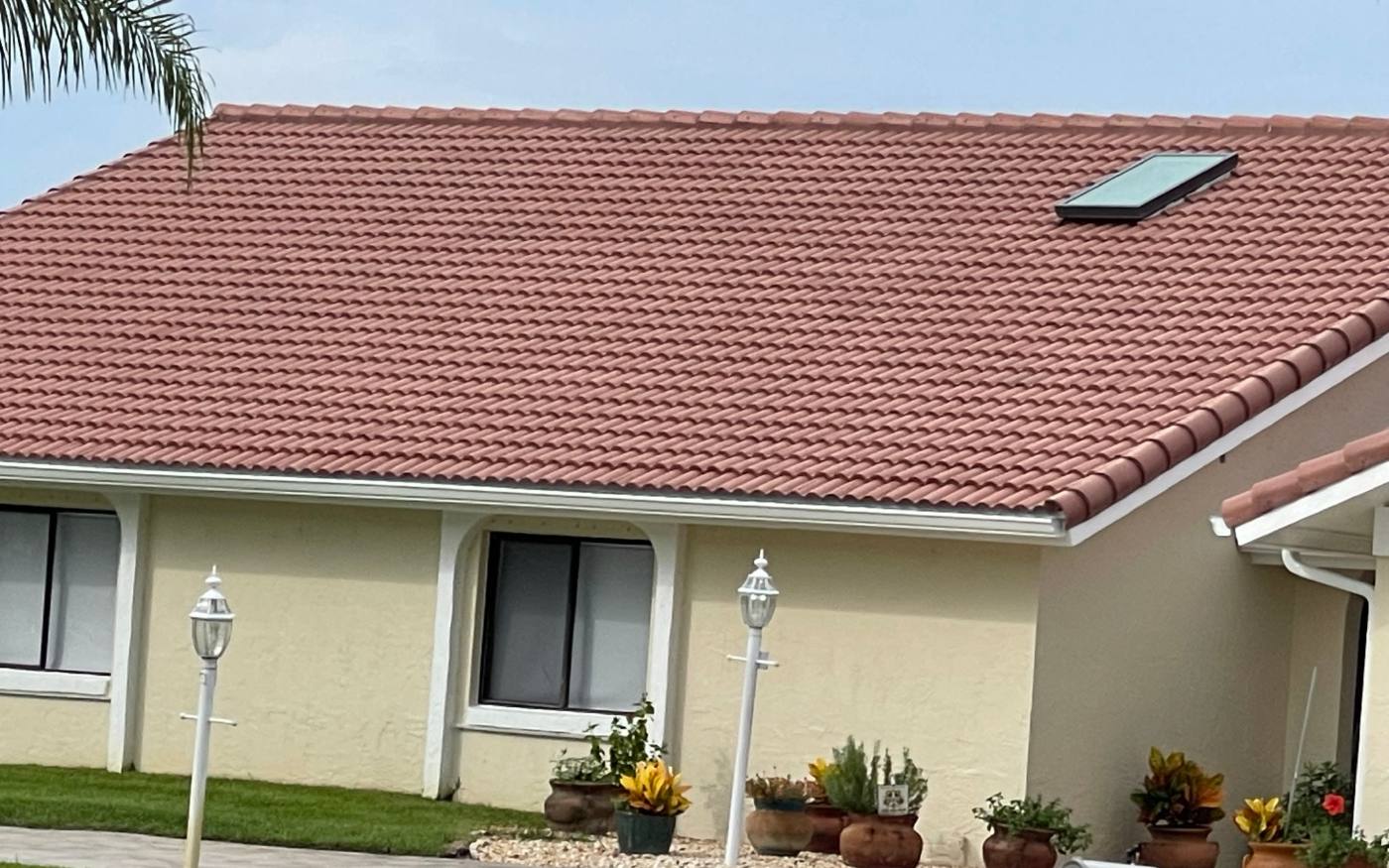
Clay and concrete tile roofs have a reputation for lasting forever, and the tiles themselves often do. What many homeowners don't realize is that the tile isn't the waterproof layer. Underneath it is an underlayment that does most of the work of keeping water out, and that layer has a much shorter life.
That's why so many 25 to 40-year-old tile roofs in metro Atlanta start leaking even though they look fine from the street.
How a tile roof really works.
Tiles shed most of the water and protect what's beneath them from sun and impact. But water still gets under tile through gaps, laps and wind-driven rain. The underlayment catches that water and carries it down and off the roof. Flashing at walls, valleys, chimneys and skylights does the same at the joints.
Why the underlayment fails.
- Age. Older felt underlayments dry out, crack and shrink in Georgia's heat, often after 20 to 30 years.
- Heat. Tile holds heat, and the space under it gets very hot in summer.
- Fastener holes. Every nail that holds a tile goes through the underlayment.
- Broken tiles. Cracked or slipped tiles expose the underlayment to direct sun, which breaks it down quickly.
- Debris. Leaves and pine needles collect in valleys and under tiles, trapping water.
Warning signs.
- Ceiling stains, often after heavy or wind-driven rain.
- Water stains or dark streaks on the attic decking.
- Cracked, slipped or missing tiles.
- Rusted or failed flashing at walls and valleys.
- Leaks that come back in different spots after repairs.
Your three options.
1. Targeted repairs. If the problem is local, like a few broken tiles or one failed flashing, we replace the tiles and rebuild the flashing around them. This is the right call on younger roofs.
2. Lift-and-relay. When the tiles are sound but the underlayment has failed across the roof, we carefully remove the tile, stack and protect it, install new high-temperature underlayment and new flashing, replace broken pieces, and relay your original tile. You keep the look of your house and get a new waterproofing system underneath.
3. Replacement. If the tile itself is failing, or the framing can't carry heavy tile, you can replace it with new clay or concrete tile, or with a lighter alternative like Brava composite tile, which gives the same look at a fraction of the weight. See Brava composite roofing.
Matching discontinued tile.
Older concrete tile profiles are often no longer made. We source salvage and compatible tiles where we can, and we'll tell you up front when a perfect match isn't possible. On some homes, using new tile on a less visible slope and moving salvaged originals to the front is a smart compromise.
Don't let other trades walk your tile.
Satellite, solar, HVAC and gutter installers break a lot of tile. If someone needs to get on your roof, make sure they know how to walk tile, or call us to protect it.
How we inspect a tile roof.
We check from the attic and the roof, count and photograph broken and slipped tiles, test-lift tiles in suspect areas to see the underlayment, check flashing at every wall, valley and penetration, and look at whether matching tile is available. Then you get clear options: repair, lift-and-relay or replacement.
Learn more about Spanish and concrete tile roofing and roof repair.
How long does tile roof underlayment last?
Older felt underlayments commonly last around 20 to 30 years in Georgia's heat. Modern high-temperature synthetic and self-adhered underlayments are rated to last much longer.
Can you replace the underlayment without new tile?
Yes. A lift-and-relay removes the tile, installs new underlayment and flashing, and puts your original tile back.
Is my tile roof covered by insurance?
Storm damage like broken tiles from hail or falling limbs is often covered. Underlayment worn out from age usually isn't.
Is Brava lighter than concrete tile?
Yes, much lighter, which is why it's a common choice when replacing heavy tile or adding to a home that wasn't built for tile.