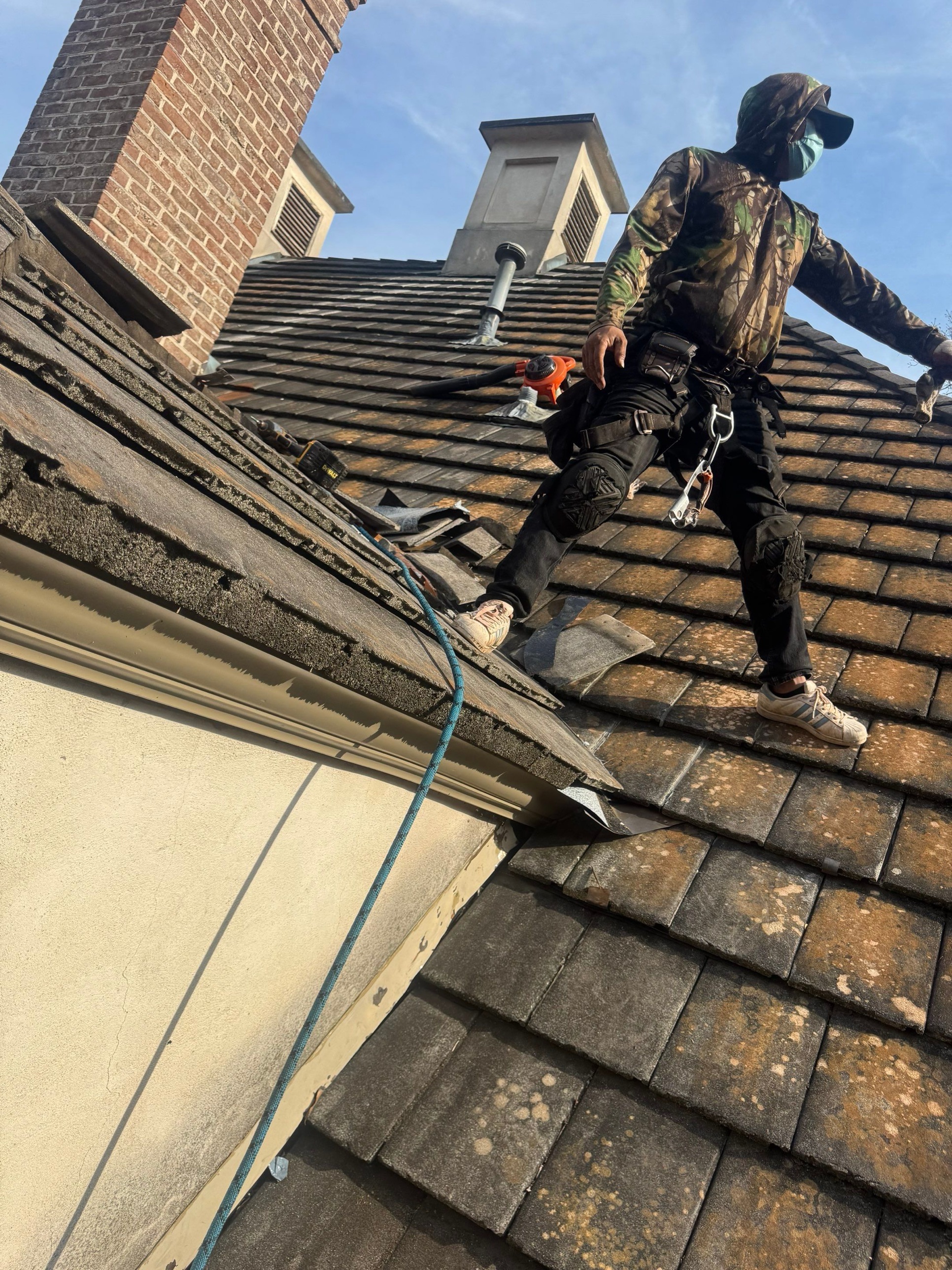
When a roof needs replacing, you'll often hear two options: install new shingles directly over the existing ones, or tear the old roof off to the deck first. Each has a place, and the right choice depends on what's under the shingles.
What a roof-over is.
A roof-over leaves the existing shingles in place and installs new roofing on top. It skips the labor and disposal of tear-off, so it can cost less up front.
What a full tear-off is.
A full tear-off removes every layer of old roofing down to the decking. The deck is inspected, damaged wood is replaced, and new underlayment, flashing and ventilation go on before the new shingles.
Why a tear-off is usually the better call.
- You can see the decking. A tear-off shows exactly what's underneath, including rot, water damage and nail issues.
- You get a fresh underlayment. Water is kept out by the underlayment, and a tear-off lets us install a new one.
- Flashing and ventilation can be fixed. Flashing and vents are rebuilt properly rather than worked around.
- Layers add weight. Two layers of shingles weigh much more than one, and extra weight can stress older framing.
- Warranties and resale. Manufacturer warranties often have requirements about how the roof is installed. A tear-off also gives buyers a clear picture of the roof's condition.
When a roof-over may make sense.
A roof-over can be reasonable when the existing roof is in good condition, has only one layer, the decking is sound, and the local code and the shingle manufacturer allow it. It can also make sense for a short-term sale where cost matters most.
Even then, ask whether the roof-over will hide problems you'll pay to fix later. Hidden decking damage found after the new roof is installed is far more expensive than finding it during a tear-off.
Local rules and permits.
Permits and code requirements vary by city and county. Some jurisdictions limit how many layers of roofing may be on a home. Confirm the rules with your local building department before deciding on a roof-over.
What we recommend.
We look at the decking, the number of layers and the condition of the underlayment before we recommend anything. On most homes we inspect, a full tear-off gives the best long-term result, and it's the approach included in our standard shingle replacement. We'll show you what we find and explain why.
Is a roof-over cheaper?
Usually, yes, on the initial quote. But the savings can disappear if the decking has to be repaired later or if the roof fails early. Compare the total cost and the warranty, not just the first number.
Will a roof-over void my warranty?
It depends on the manufacturer and the warranty. Some warranties specify how many layers are allowed or require a tear-off. Check the warranty before you decide, and ask us to confirm what applies to your roof.