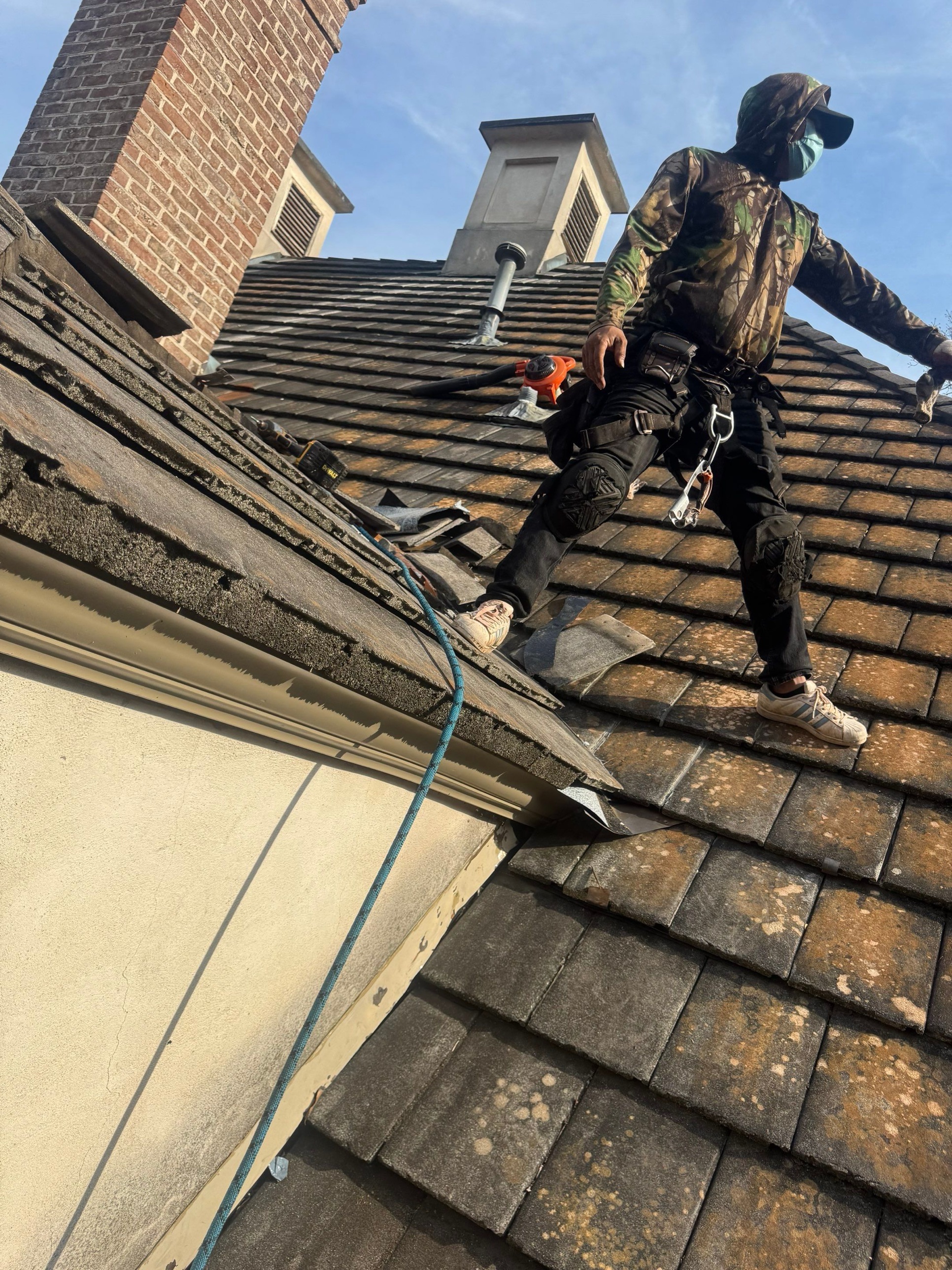
A good crew can handle most of the work on its own. Still, a little preparation on your end makes the project faster, safer and less disruptive. Here's a checklist for the days before your roof is replaced.
Inside the home.
- Attic. Clear stored items away from the access point and out of the attic if possible. Dust and debris from the tear-off can settle on anything below.
- Ceilings and walls. Move artwork, mirrors and anything fragile away from walls and ceilings below the work area. Vibration can knock items loose.
- Lights and fixtures. Note any light fixtures or ceiling fans that are near the roof edge or in the work area.
Outside the home.
- Vehicles. Move cars out of the driveway on work days, and keep them away from the house. Falling debris and nails can damage paint and windshields.
- Landscaping. Trim any tree limbs that hang over the roof. Move potted plants, furniture and grills away from the house.
- Gutters and downspouts. Let us know about any that are loose or damaged. We'll note them in the proposal so there are no surprises.
- Sprinklers and buried lines. Mark the location of irrigation heads, low-voltage lighting and buried utilities so the crew can avoid them.
- Access. Make sure the crew can get to the side of the house and the backyard. Unlock gates and move any obstacles.
Pets and family.
Keep pets indoors or with a sitter on work days. Roofing involves ladders, equipment and loud noises. Let your household know when the crew is expected to arrive and leave.
Schedules and communication.
- Share a phone number where you can be reached during the day.
- Tell us about any days you'll be out, so the crew can plan around them.
- Ask us to confirm the start date, expected duration and when the crew will be arriving and leaving each day.
After the work.
Walk the property with the crew at the end of the job. Check the yard for nails, look over the gutters and confirm the final details. If you notice anything that needs attention, tell us before the crew leaves so it can be addressed the same day.
Do I need to move my car out of the garage?
You don't have to, but it's a good idea to keep it away from the house on work days. Debris can land near garage doors and driveways, and staying clear of the work zone keeps the crew moving safely.
How long does it take to prepare?
Most homeowners spend an hour or two in the days before the work. Most of it is moving cars, clearing the attic and marking any buried lines. The rest is just letting us know what to expect.