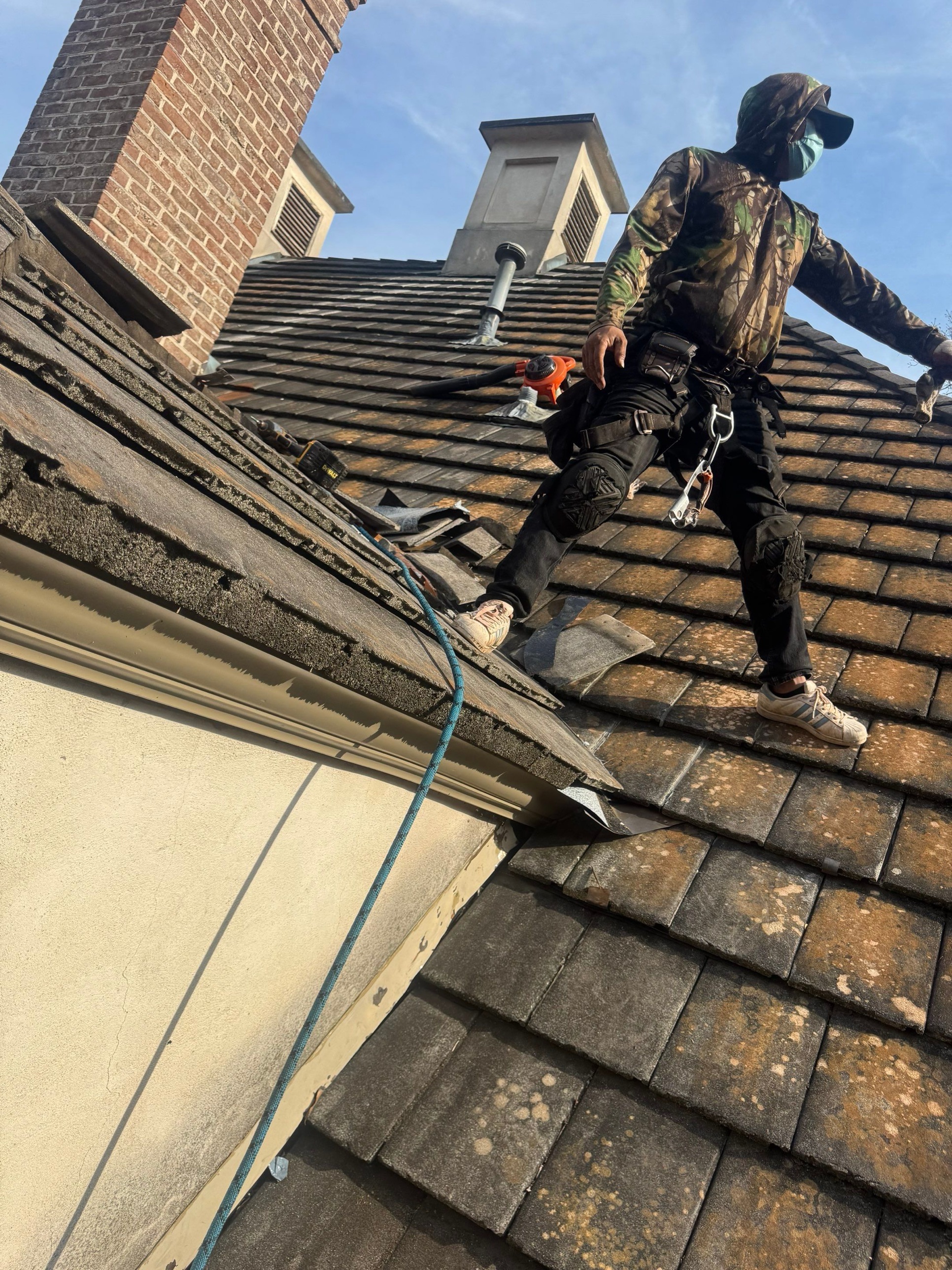
Every roof wears down over time, but Atlanta's climate speeds up some problems more than others. Knowing what to look for helps you catch small issues before they become leaks, ceiling stains or full replacements.
Granule loss.
Asphalt shingles are coated with ceramic granules that protect them from UV rays. Granules gradually wash off over the years, and in storms they can be knocked loose. If you see dark, bare patches or find granules in your gutters or at the downspouts, the shingles are losing their protection.
Cracked, curled or lifted shingles.
Heat and age make shingles brittle. Curling edges, lifted tabs and cracked shingles can let wind and water under the surface. Wind events in metro Atlanta often lift shingles that were already loose.
Failed flashing.
Flashing is the metal that seals the roof where it meets walls, chimneys, skylights and vents. The sealant around flashing dries out and cracks over time, and it's one of the most common sources of leaks. Check for cracked caulk, rust or gaps where flashing meets a wall.
Pipe boots and vent seals.
The rubber collars around plumbing vents crack and split after several years in the sun. A cracked pipe boot can let water run down the pipe and into the attic or the ceiling below.
Clogged or damaged gutters.
Gutters full of leaves and debris hold water against the fascia and roof edge. Over time that can rot wood and cause water to back up under the shingles. Loose or sagging gutters should be repaired before they pull away from the house.
Poor attic ventilation.
An attic without enough airflow traps heat and moisture. In summer, that heat cooks shingles from below. In winter, trapped moisture can cause condensation, mold and rot. Signs include a hot attic, musty smells, and frost or dampness on the underside of the roof deck.
Storm damage.
Hail, wind and fallen limbs cause damage that isn't always visible from the ground. Bruised shingles, cracked ridge caps and dented metal can start leaking months after a storm. If you've had a storm, have the roof inspected even if nothing looks wrong.
What to do when you spot a problem.
- Take photos from the ground and, if it's safe, from a ladder. Date them.
- Check the attic after heavy rain for water stains, wet insulation or light coming through the decking.
- Call a licensed roofer for an inspection rather than climbing on the roof yourself.
- Keep records of every repair, inspection and warranty. They help with insurance claims and home sales.
How often should a roof be inspected?
At least once a year, and after any significant storm. An inspection is quick and often finds small problems that cost far less to fix now than later.
Are these problems covered by insurance?
Usually, sudden damage from a storm may be covered, while gradual wear and maintenance problems generally aren't. Your policy and the specifics of the damage decide the outcome, so document everything and ask questions before you accept an adjuster's estimate.